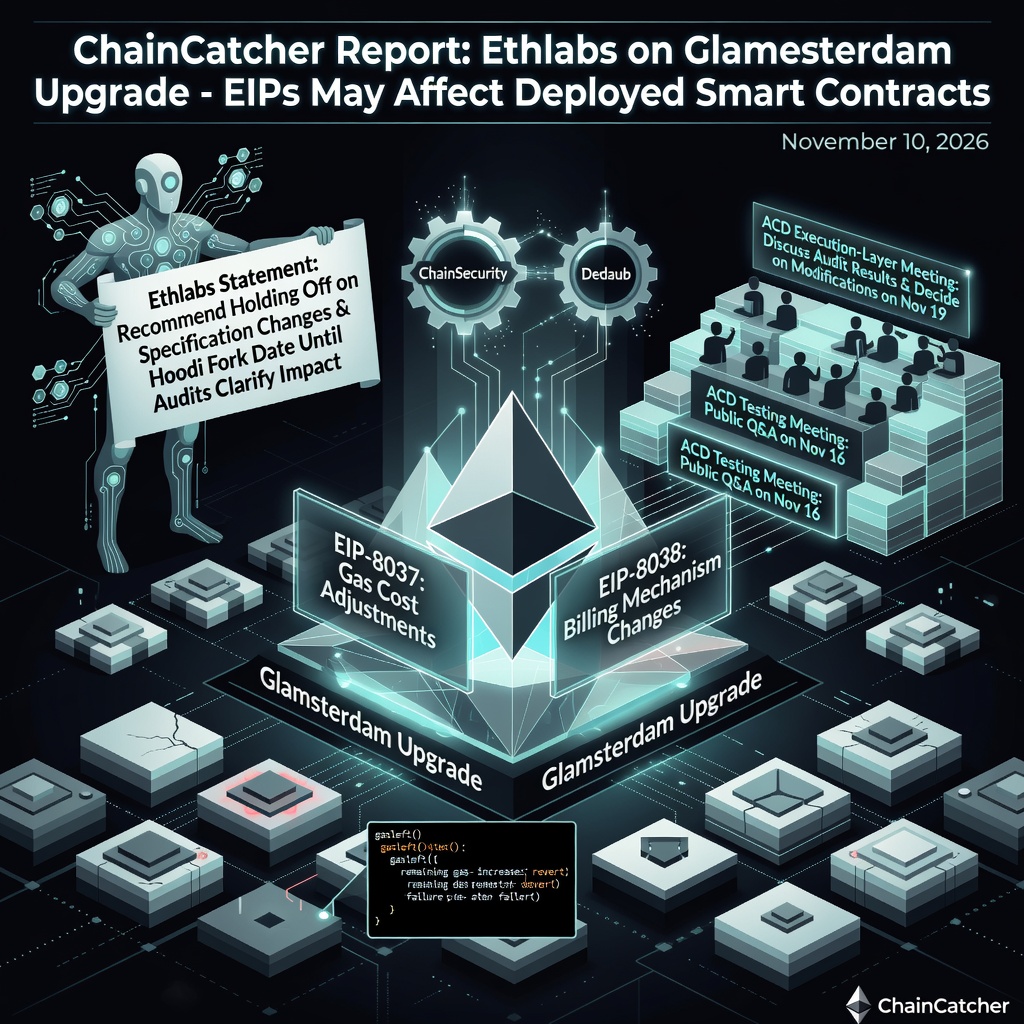
On November 10, 2026, ChainCatcher reported that Ethlabs, a nonprofit Ethereum research and development organization, had published a statement on two proposals in the planned Glamsterdam upgrade. EIP-8037 and EIP-8038 adjust gas costs and the billing mechanism. Ethlabs said those changes may affect some smart contracts that are already deployed.
What remains undecided
Ethlabs recommended holding off on changes to the upgrade specification, and on setting a Hoodi testnet fork date, until external audit results are published and the impact is clearer. It said the final decision belongs to the Ethereum core developers meeting (ACD).
The statement treated both EIPs as part of a planned upgrade, not as changes already activated on the network. As of that report, neither a specification revision nor a Hoodi fork date had been fixed.
Audits and meetings then on the calendar
The Ethereum Foundation had commissioned two external audits, from ChainSecurity and Dedaub. Those audits were expected to be published before November 16. On that same day, an ACD testing meeting was to hold a public question-and-answer session. The ACD execution-layer meeting on November 19 was expected to discuss the audit results and might decide whether to modify the upgrade specification.
Gas limit and compatibility
Glamsterdam is intended to raise Ethereum’s per-block gas limit from 60 million to 200 million. Ethlabs said gas-cost adjustments may affect contracts and tools that hardcode operation costs. Billing-mechanism changes may also cause unexpected behavior in some deployed contracts. One example it gave: after an internal call reverts, the remaining gas returned by gasleft() increases instead, which can affect a contract’s judgment of whether the call failed because it ran out of gas.
Original article (ChainCatcher, November 10, 2026): https://www.chaincatcher.com/article/2303336