Historical report: Odaily published its Chinese translation of Vitalik Buterin’s remarks on November 9, 2026, at 09:54 (UTC+8). The arguments below reflect that reporting date.
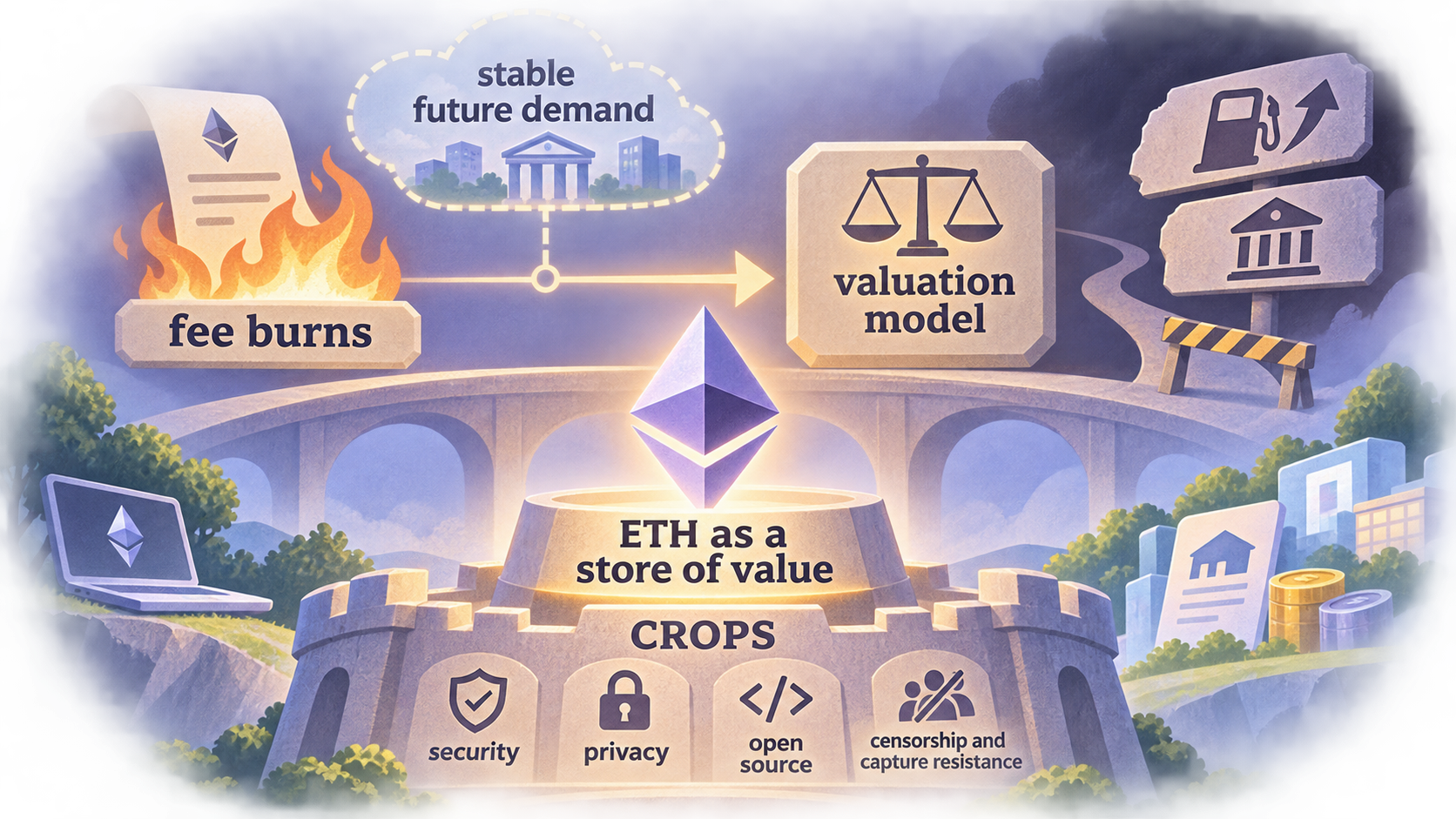
Vitalik Buterin argued that Ethereum should place greater emphasis on ETH as a store of value than on transaction-fee burns as a basis for its valuation. He said EIP-1559 and its burn mechanism should remain, but that a burn rate persistently below 10% of new ETH issuance would not, by itself, be a reason for disappointment.
Why burns may not provide a valuation floor
Buterin described a simplified valuation model: if a token reliably burns $1 billion worth of fees each year, a 4% discount rate would imply a value of about $25 billion. His objection is that the reliability assumption may not hold. Much of Ethereum’s fee burning in 2021–2023 came from activity within the crypto economy. If ETH’s price fell sharply, participants in those activities might also have less to spend on fees. He cited both NFT buying frenzies—including an episode with roughly $180 million in fees burned in one day—and more routine lending activity.
Demand from outside crypto, including a growing real-world asset economy, could offer firmer support, he argued. But mature businesses would be unlikely to reproduce the exceptional fees generated during speculative surges.
The costs of making burns the goal
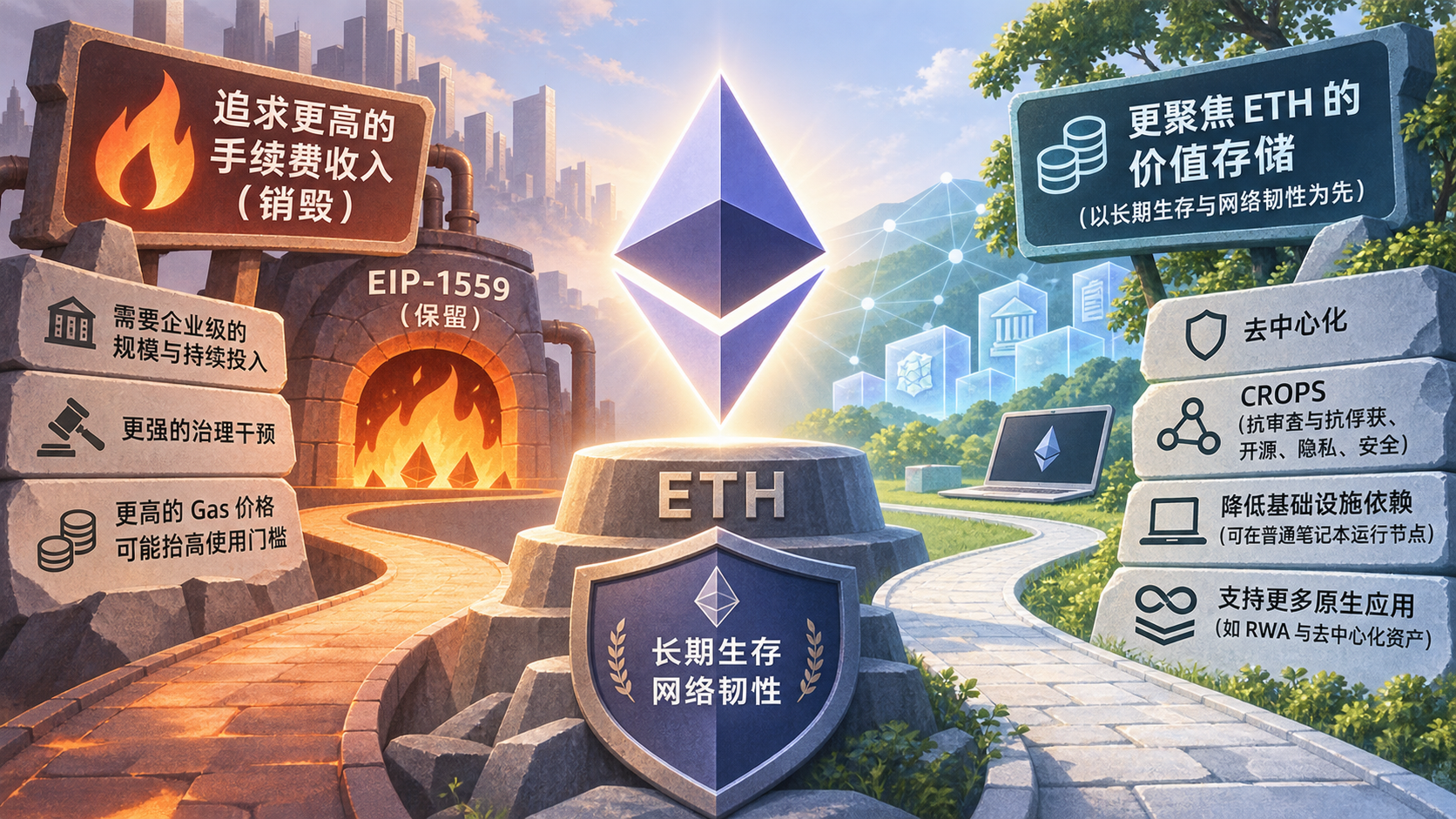
Buterin said that justifying ETH’s then roughly $270 billion market value through fee burns would require Ethereum to operate on the scale of a major global company. In a hypothetical comparison with L’Oréal, he used an AI-generated estimate putting annual research and development spending at about 0.58% of its market value. Applying that approach to Ethereum, he estimated, could require around 700,000 ETH a year in protocol funding and reduce validator revenue by about two-thirds. These were estimates for a hypothetical funding model, not a proposed or enacted protocol change.
He also warned that pursuing more fee revenue could encourage higher gas prices and more interventionist governance. Both, in his view, could work against broad access, decentralization and resistance to capture.
What durability would require
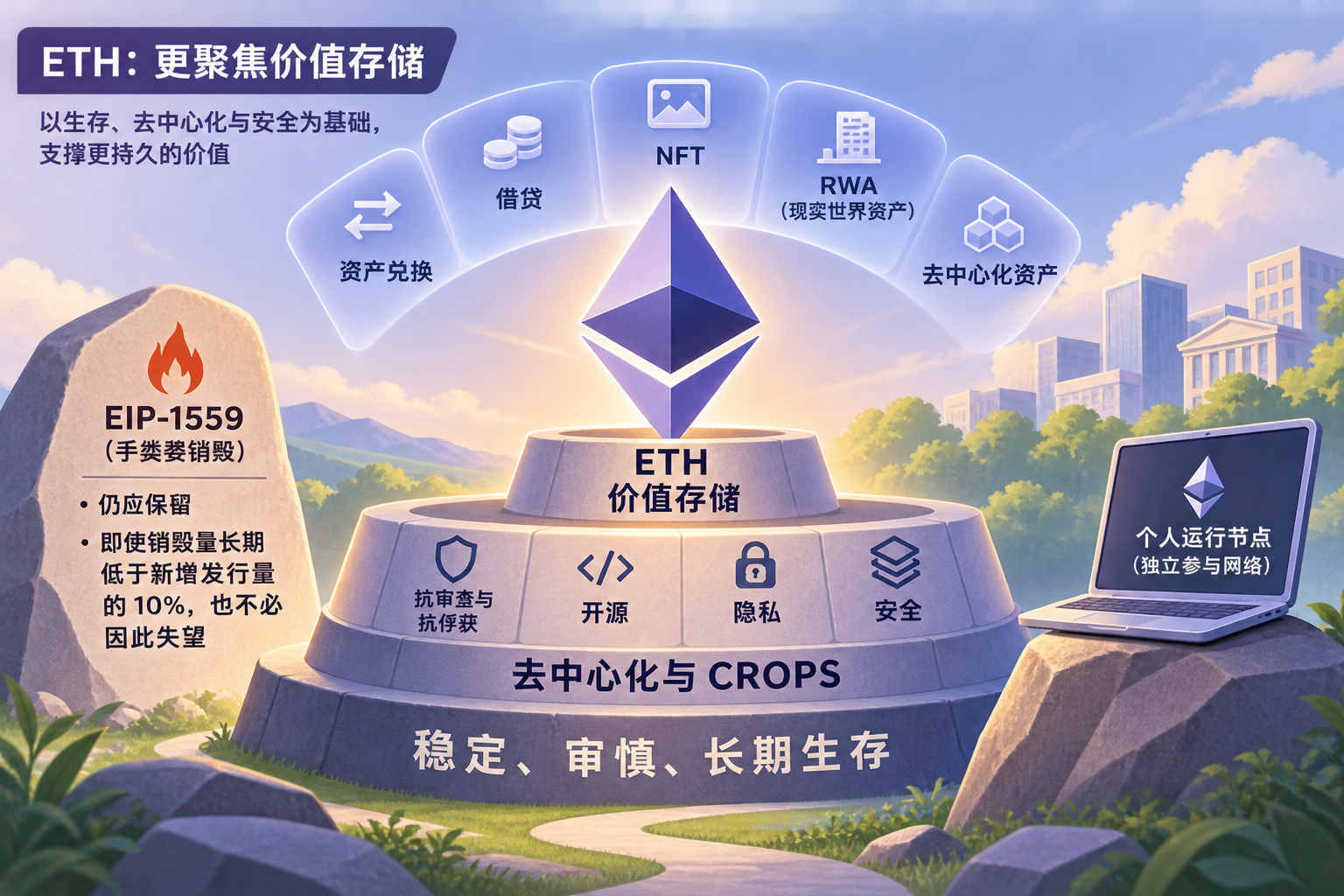
For a store-of-value case, Buterin put Ethereum’s long-term survival first. He emphasized decentralization and what he called CROPS: censorship and capture resistance, open source, privacy and security. He called for careful responses to risks from quantum computing and AI, a progressively more stable core protocol, and a high bar for features that add complexity or create rewards vulnerable to capture.
He pointed to multisignature wallets, privacy tools, private account abstraction and FOCIL as work serving security and user autonomy—not as upgrades that the report says have been activated. He also stressed reducing dependence on infrastructure providers, saying he could run a node on a laptop that synchronized in under six hours and used about one-eighth of its disk space, an improvement over his experience in 2019.
Buterin did not present ETH’s store-of-value role as separate from applications. He argued that more real-world and decentralized assets issued natively on Ethereum L1 could make ETH more useful for trustless exchange and as collateral, while acknowledging that some changes supporting activity—such as shorter block intervals—could put pressure on decentralization.
Source: odaily.news (originally published 2026-11-09 09:54 UTC+8)