Original report: November 7, 2026, 16:12 (UTC+8). Written by William M. Peaster for Bankless and translated by TechFlow. The deployments and economic effects below are claims made in that report, not independently verified network changes.
How Hooks change pool behavior
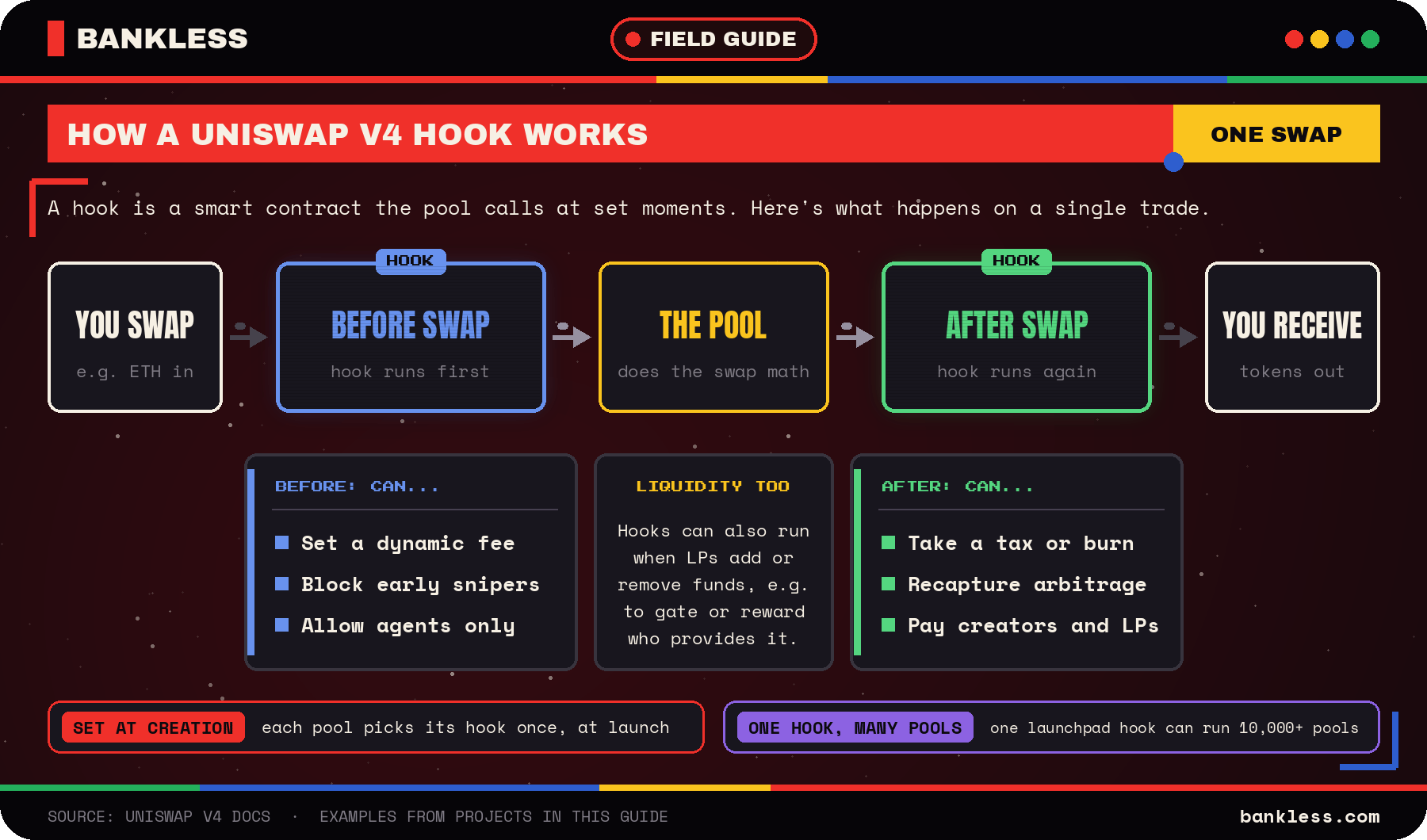
Uniswap v4 Hooks are smart contracts that can run custom logic at defined points in a pool’s lifecycle: before or after pool initialization, liquidity changes, swaps, and donations. The report describes potential uses including dynamic fees, time-weighted market-making, limit orders and liquidity-provider rewards. These are possible applications of the mechanism, not features that every pool enables.
What the report says about Robinhood Chain
The article presents Robinhood Chain as a setting for Hook-based liquidity strategies. It argues that retail order flow could reduce impermanent loss and increase fee income for liquidity providers compared with trading environments dominated by sophisticated arbitrageurs. Those outcomes are the author’s assessment; the source supplies no figures establishing them.
It names Hookr as an automated concentrated-liquidity management project and Pearl DEX as using a dynamic-hedging Hook. It also describes cross-protocol aggregation of onchain liquidity and centralized order-book depth, without naming a specific protocol. The source does not provide deployment records or other evidence with which to verify the stated implementations.
Risks for liquidity providers
Custom Hook code introduces another place for errors in pool operations. The report flags potential reentrancy or logic flaws, additional gas costs from external calls, and the importance of checking audits and contract permissions before providing liquidity. These risks depend on the particular Hook; they are not evidence that a named project has suffered an exploit.
Source: techflowpost.com (originally published 2026-11-07 16:12 UTC+8)