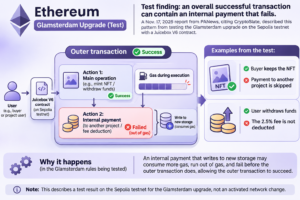
In reporting dated November 17, 2026, tests of the proposed Glamsterdam upgrade identified a compatibility risk for existing Ethereum contracts: an outer transaction could succeed on Sepolia even when an internal payment failed. The finding concerns test behavior, not a change activated on mainnet.
According to Juicebox technical documentation, a simulated NFT purchase could deliver the NFT after an internal payment to an associated project ran out of gas. The unpaid funds remained in the payment project. In a separate token-distribution test, the reserved-token allocation completed, but a cross-project payment did not; the beneficiary received the project’s original tokens instead of the intended cross-project payment result. Redemption tests found that, within a reported range of 679,622 to 817,622 gas, users could redeem funds while an internal 2.5% protocol fee failed to execute.
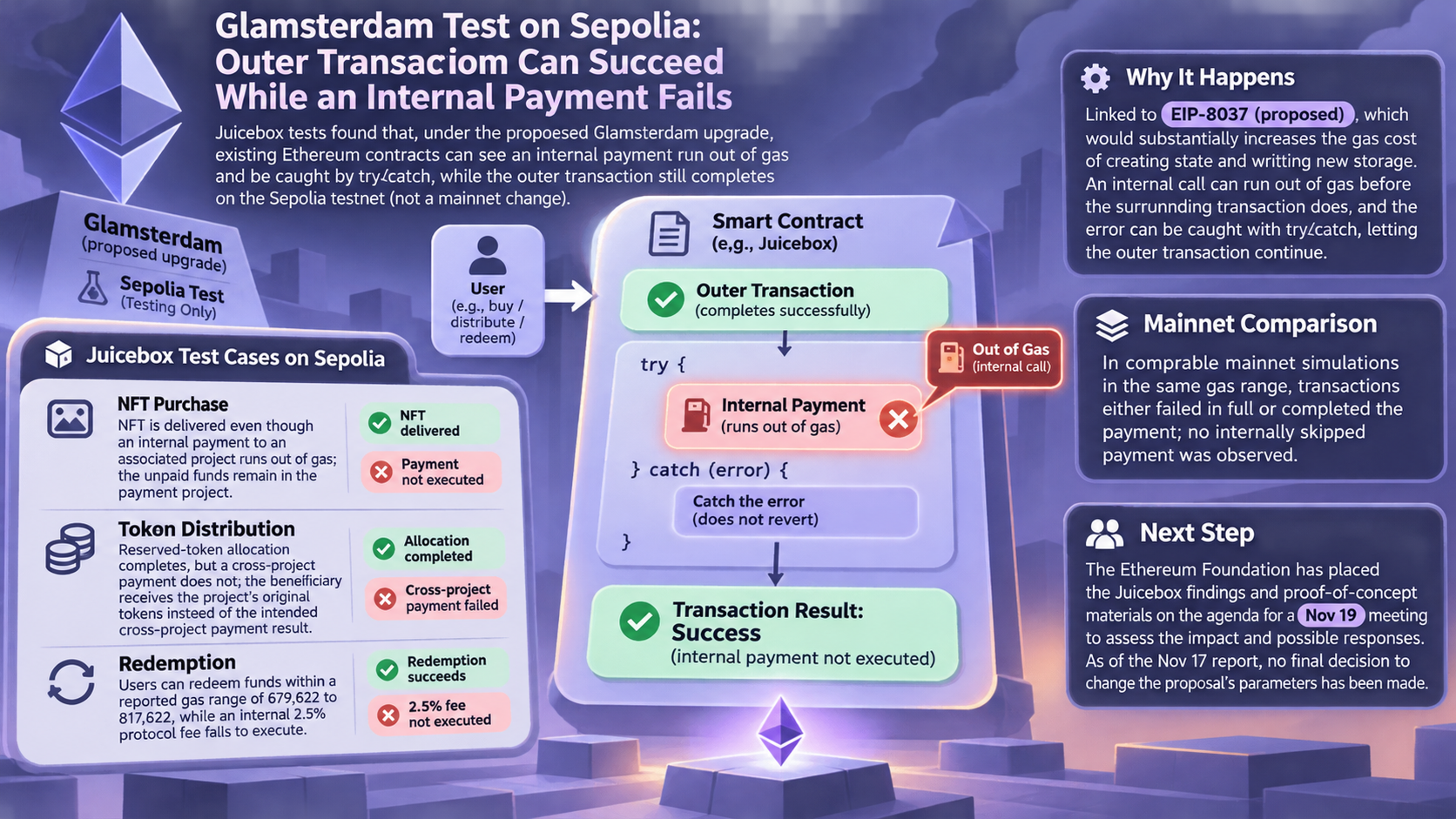
Juicebox developer mejango linked the behavior to proposed gas-cost changes under EIP-8037, which would substantially increase the cost of creating state and writing new storage. An internal call can run out of gas before the surrounding transaction does. Where a contract catches that error with try/catch, the outer transaction can continue rather than revert. The developers said comparable mainnet simulations in the same gas range either failed in full or completed the payment; they did not observe an internally skipped payment there.
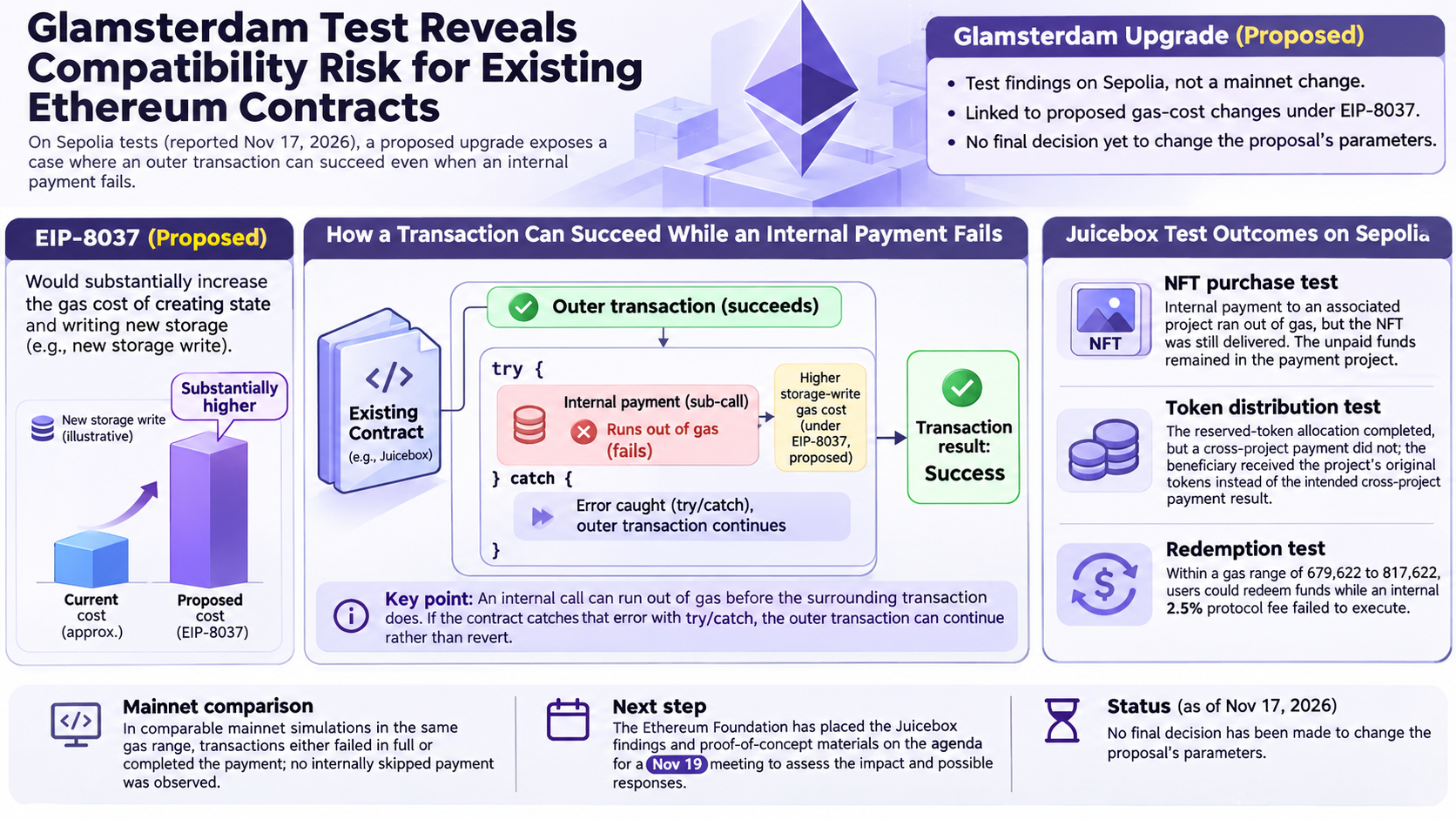
The report said the Ethereum Foundation had placed the Juicebox findings and proof-of-concept materials on the agenda for a November 19 meeting to assess the impact and possible responses. As of the November 17 report, no final decision to change the proposal’s parameters had been made.