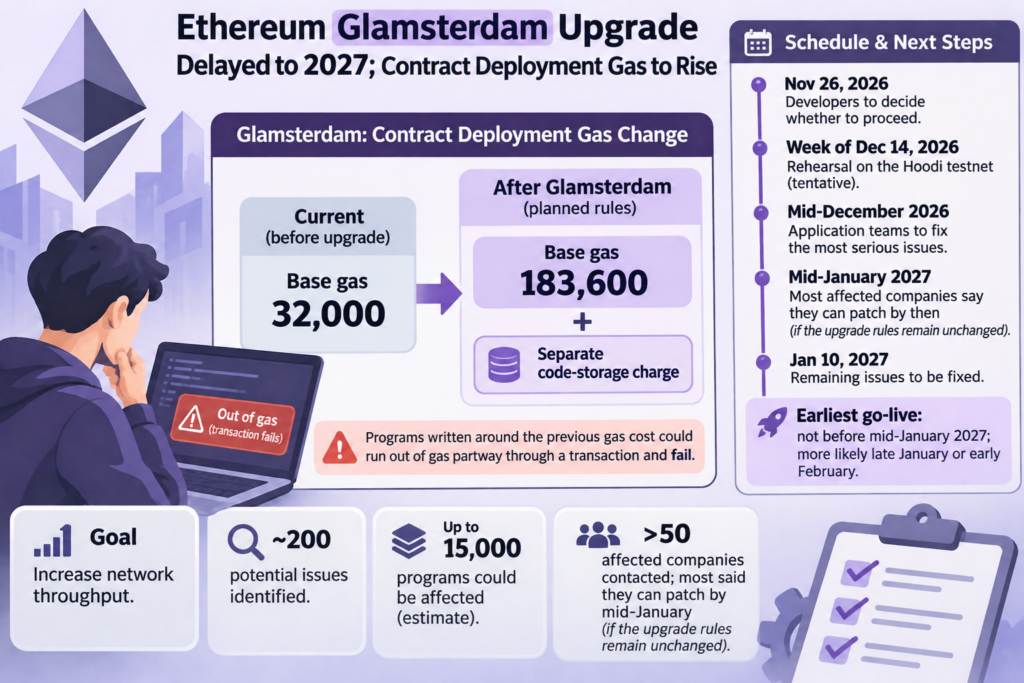
As reported on November 20, 2026, Ethereum core developers said the Glamsterdam upgrade, previously planned for December 2026, would not go live before mid-January 2027. Late January or early February was considered more likely, allowing affected application teams time to make fixes. The upgrade had not been activated.
Glamsterdam is intended to increase network throughput, but its planned rules would also raise the cost of creating permanent on-chain data. The base gas for deploying a new smart contract would rise from 32,000 to 183,600, with a separate charge for code storage. Programs written around the previous gas cost could run out of gas partway through a transaction and fail.
Security researchers had identified about 200 potential issues. Ethereum Foundation developer Marius van der Wijden estimated the previous week that as many as 15,000 programs could be affected. The Ethereum Foundation and external security researchers had contacted more than 50 affected companies; most said they could patch their code by mid-January if the upgrade rules remained unchanged.
Developers tentatively planned a rehearsal on the Hoodi testnet during the week of December 14, 2026. They were due to decide whether to proceed at their November 26 meeting. Application teams were expected to fix the most serious issues by mid-December and the remaining issues by January 10, 2027.