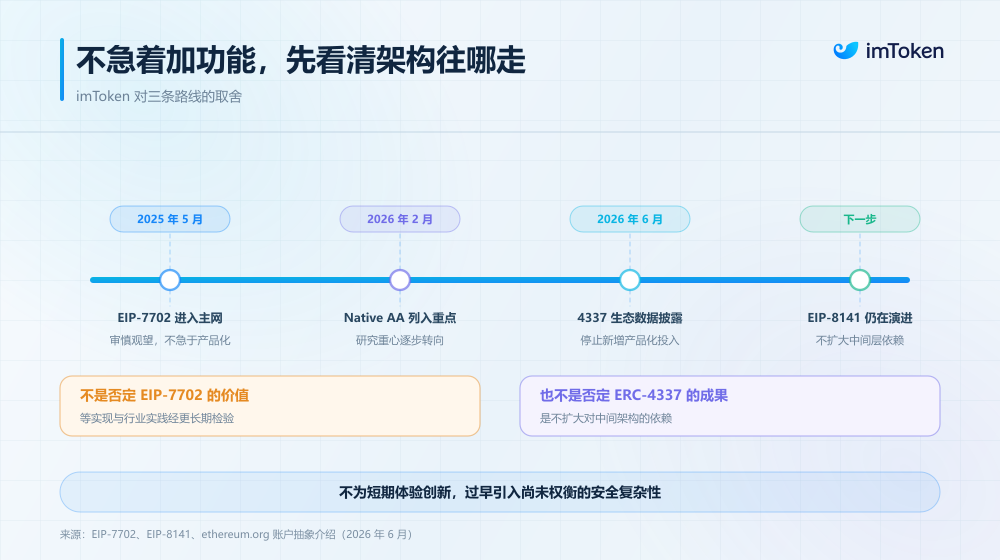
In an article published on November 21, 2026, at 07:55 UTC+8, imToken described a cautious approach to Ethereum account abstraction: it is not rushing to bring EIP-7702 broadly into its products, has stopped new productization investment in ERC-4337, and is shifting research toward native account abstraction. The company framed those choices around what users can understand and authorize safely—not a rejection of programmable accounts.
More capable accounts, broader permissions
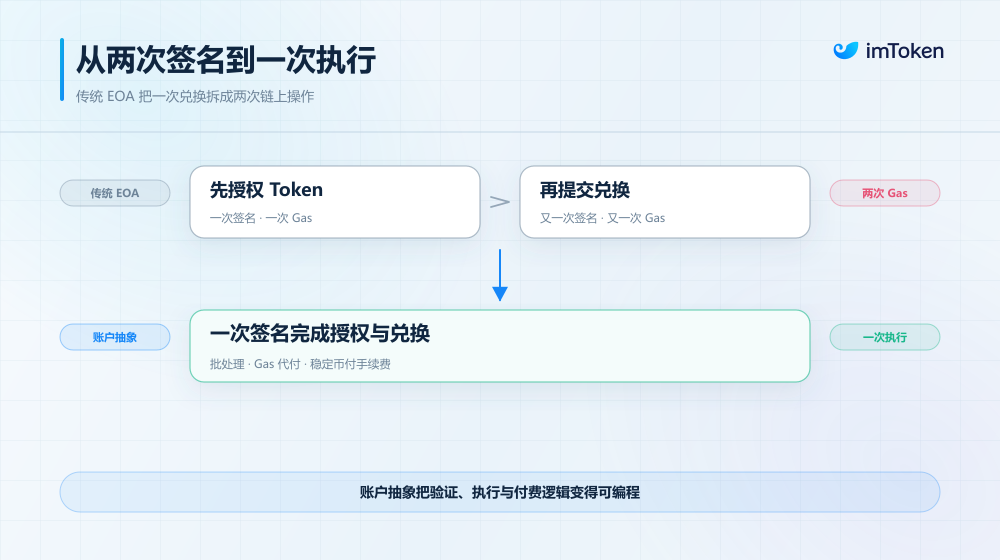
A conventional externally owned account (EOA) is controlled by a private key. Its relatively simple control model limits what the account can do directly: an ERC-20 swap, for example, may require a separate approval and swap transaction, while account-level spending limits or different signing rules are difficult to express.
Account abstraction aims to make validation, execution and fee payment more programmable. That can support operations such as batching transactions and having a third party pay gas. imToken’s concern is that a single confirmation may then authorize more than the transaction a user expects—including changes to the code or permissions governing the account.
EIP-7702: delegation changes the risk boundary
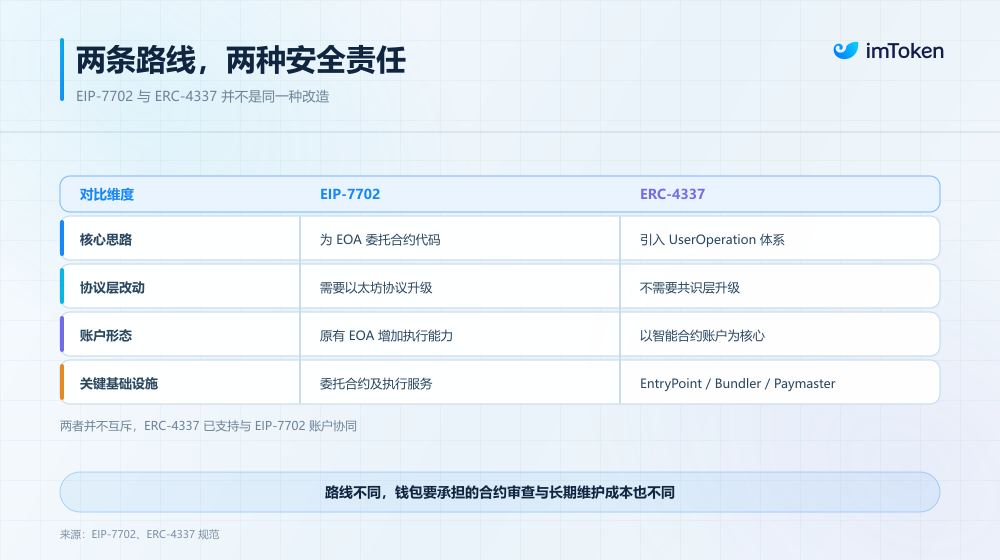
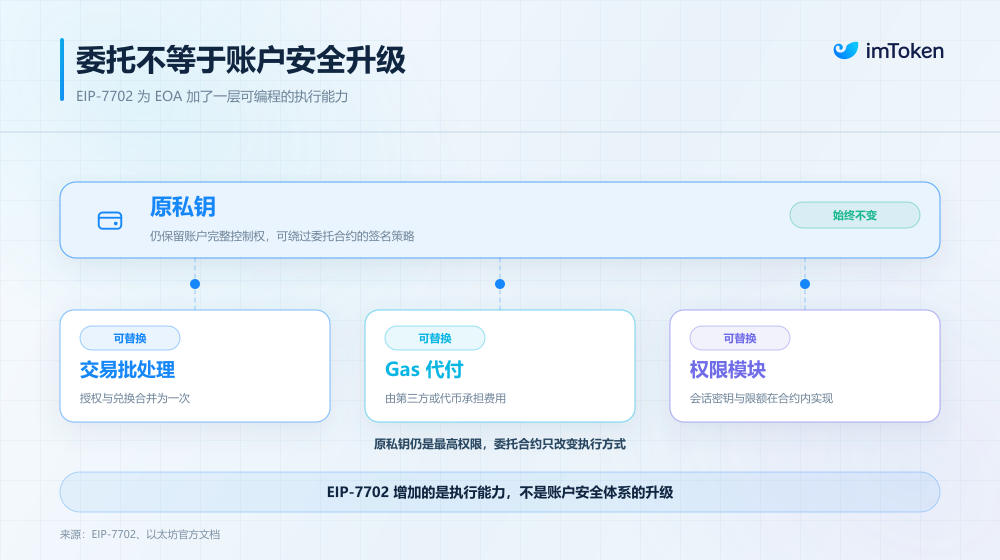
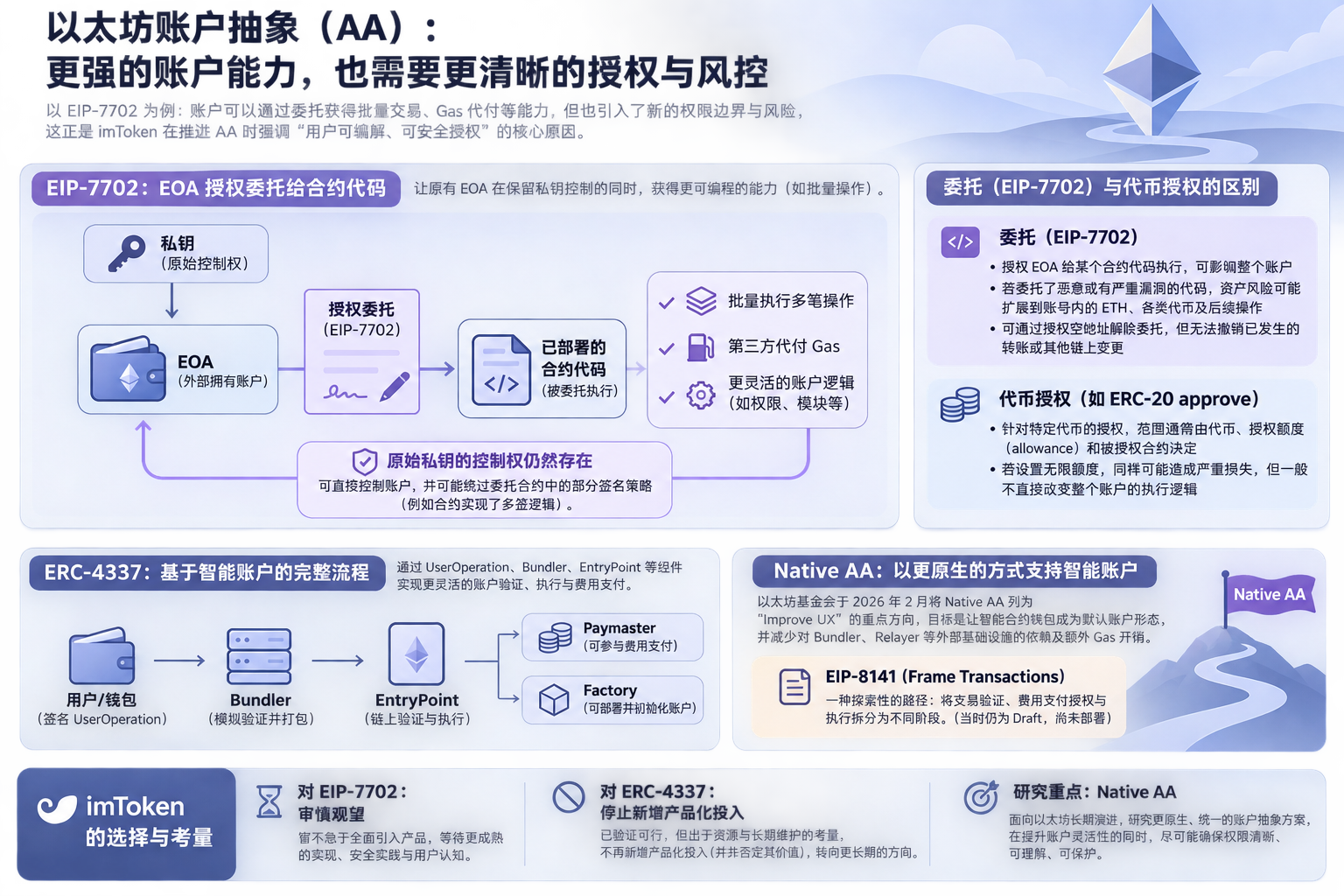
EIP-7702 is already on Ethereum mainnet. It lets an EOA authorize delegation to deployed contract code, giving an existing account access to capabilities such as batching. imToken argues that delegation to malicious or seriously flawed code could expose assets across the account if that code can transfer assets or make unrestricted calls. This differs from a token approval, whose immediate scope is generally defined by the token, allowance and approved contract—though an unlimited approval can also cause severe losses.
Delegation does not remove the original private key’s control over the EOA. As imToken notes, that key may still bypass some signing policies imposed by delegated code, even if the code implements multisignature logic. Authorizing an empty address can remove a delegation, but cannot reverse transfers or other on-chain changes already made. These distinctions inform imToken’s call for clearer authorization screens, contract identification, permission displays and revocation controls before broad product adoption.
ERC-4337: a different set of dependencies
ERC-4337 uses smart accounts and a supporting workflow rather than adding delegation to an existing EOA. A wallet signs a UserOperation; a Bundler checks it through EntryPoint simulation, then submits it to the on-chain EntryPoint for validation and execution. A Paymaster can participate in fee payment, while a Factory may deploy and initialize a new account.
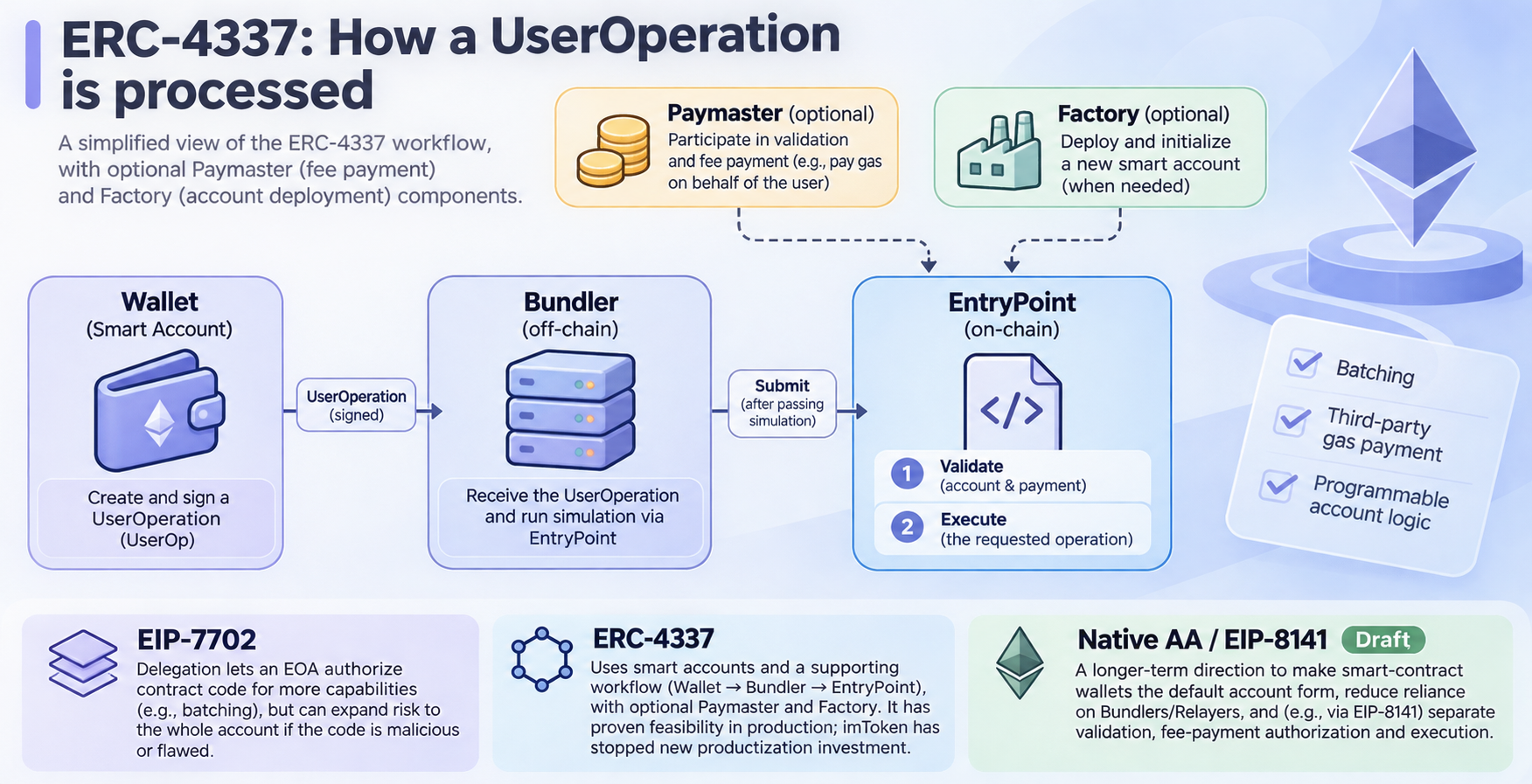
Those components create compatibility, reliability and security-review work. Account code, signing rules, modules, EntryPoint versions and infrastructure choices can also affect future migration. imToken says ERC-4337 has demonstrated the feasibility of smart accounts in production, and notes that it supports compatibility with EIP-7702. Its decision to stop new ERC-4337 productization investment is a resource and maintenance choice, not a claim that the standard lacks value.
Native AA remains a roadmap direction
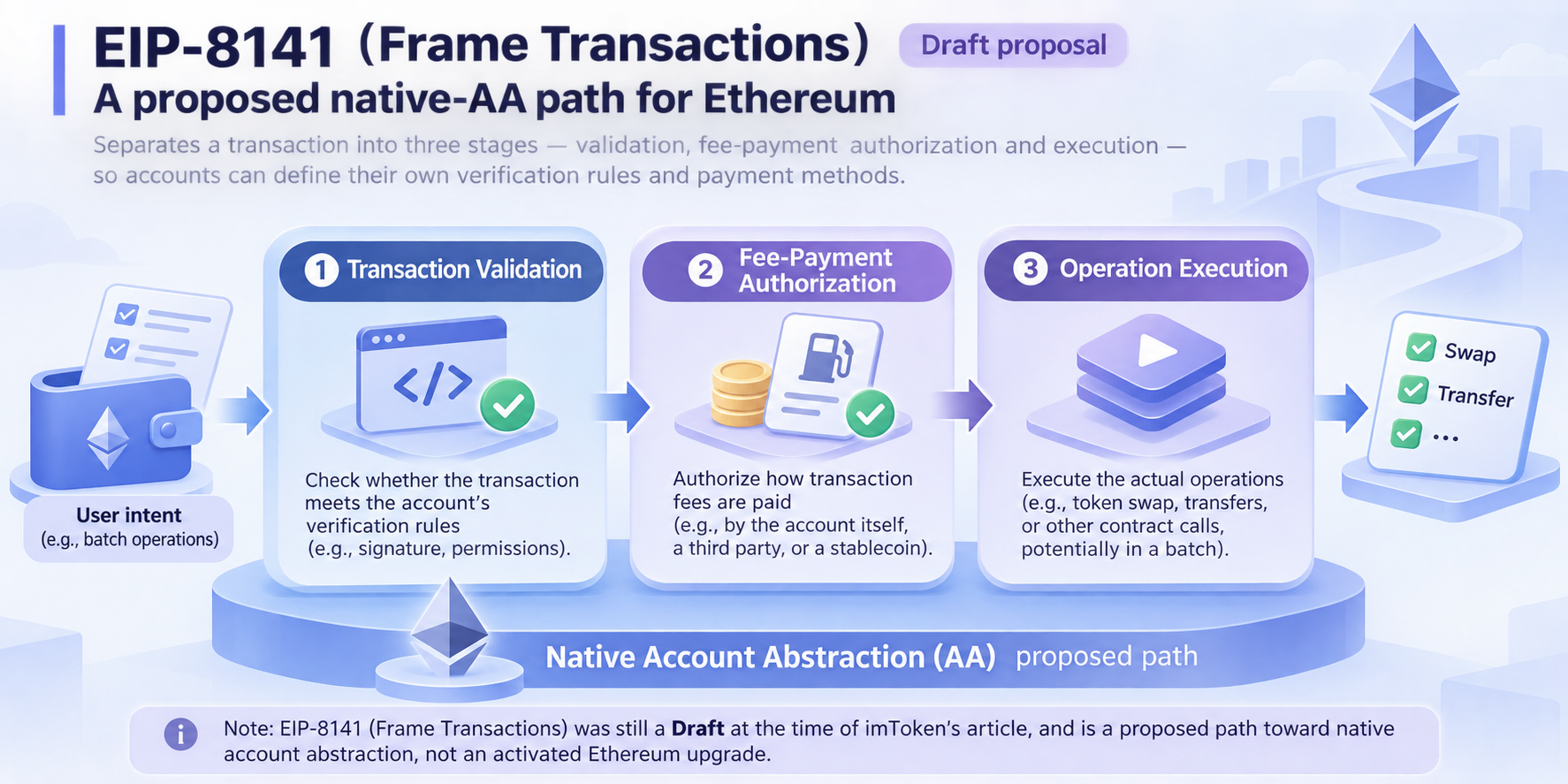
According to imToken, the Ethereum Foundation listed native account abstraction among its “Improve UX” priorities in February 2026. The longer-term aim is to make smart-contract wallets a default account form while reducing reliance on infrastructure such as Bundlers and Relayers and the associated gas overhead.
EIP-8141, or Frame Transactions, is one proposed path: it would separate transaction validation, fee-payment authorization and execution into stages. It was still a Draft at the time of imToken’s article, not a deployed upgrade. Native support would not eliminate the need to audit account validation code or test new payment and verification mechanisms. For imToken, the open question is how to gain more flexible accounts without making their permissions harder for users to understand—or their assets harder to protect.