
As reported on November 6, 2026, Kinetiq’s Elysium was scheduled to launch on Monday, November 9. The chain is intended to give applications around Hyperliquid more room to operate, with token trading and issuance among its initial uses. Fomo and Pumpfun trading apps were expected to support Elysium, while GMGN said it would join on launch day.
A separate execution environment
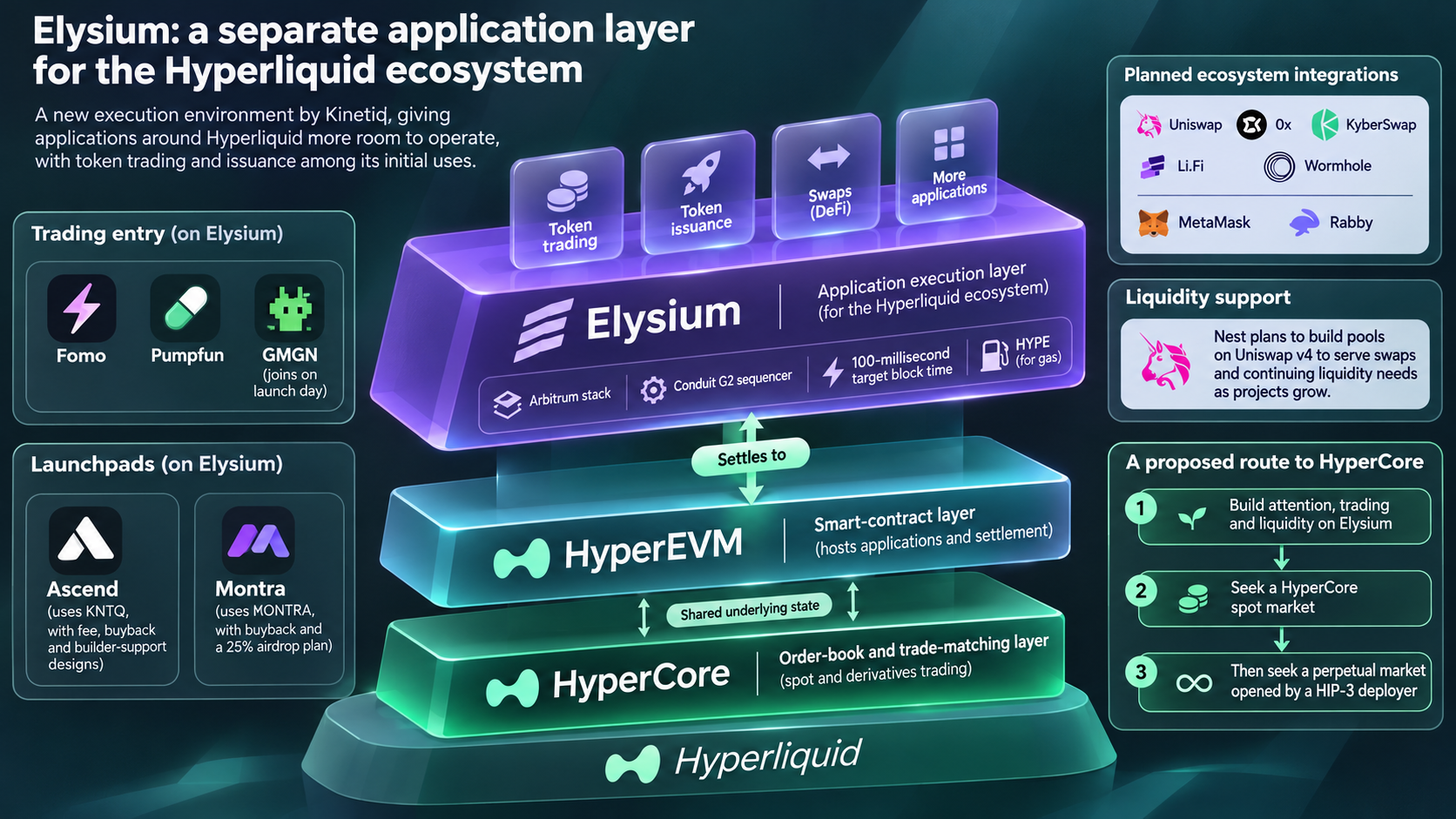
HyperCore handles Hyperliquid’s order books and trade matching; HyperEVM hosts smart-contract applications. They share underlying state, and HyperEVM’s execution capacity must account for HyperCore’s operation. Elysium is intended to provide additional space for applications without placing all their activity on HyperEVM.
In an interview, Kinetiq co-founder Omnia said Elysium uses the Arbitrum technology stack and Conduit’s G2 sequencer, targets 100-millisecond blocks, uses HYPE for gas and settles to HyperEVM. These are the chain’s stated design and target, not evidence of its performance after launch.
Omnia also named Uniswap, 0x, KyberSwap, Li.Fi and Wormhole among the planned ecosystem integrations, alongside wallets including MetaMask and Rabby. Nest plans to build pools on Uniswap v4 to serve swaps and continuing liquidity needs as projects grow.
Two launchpads, different token models
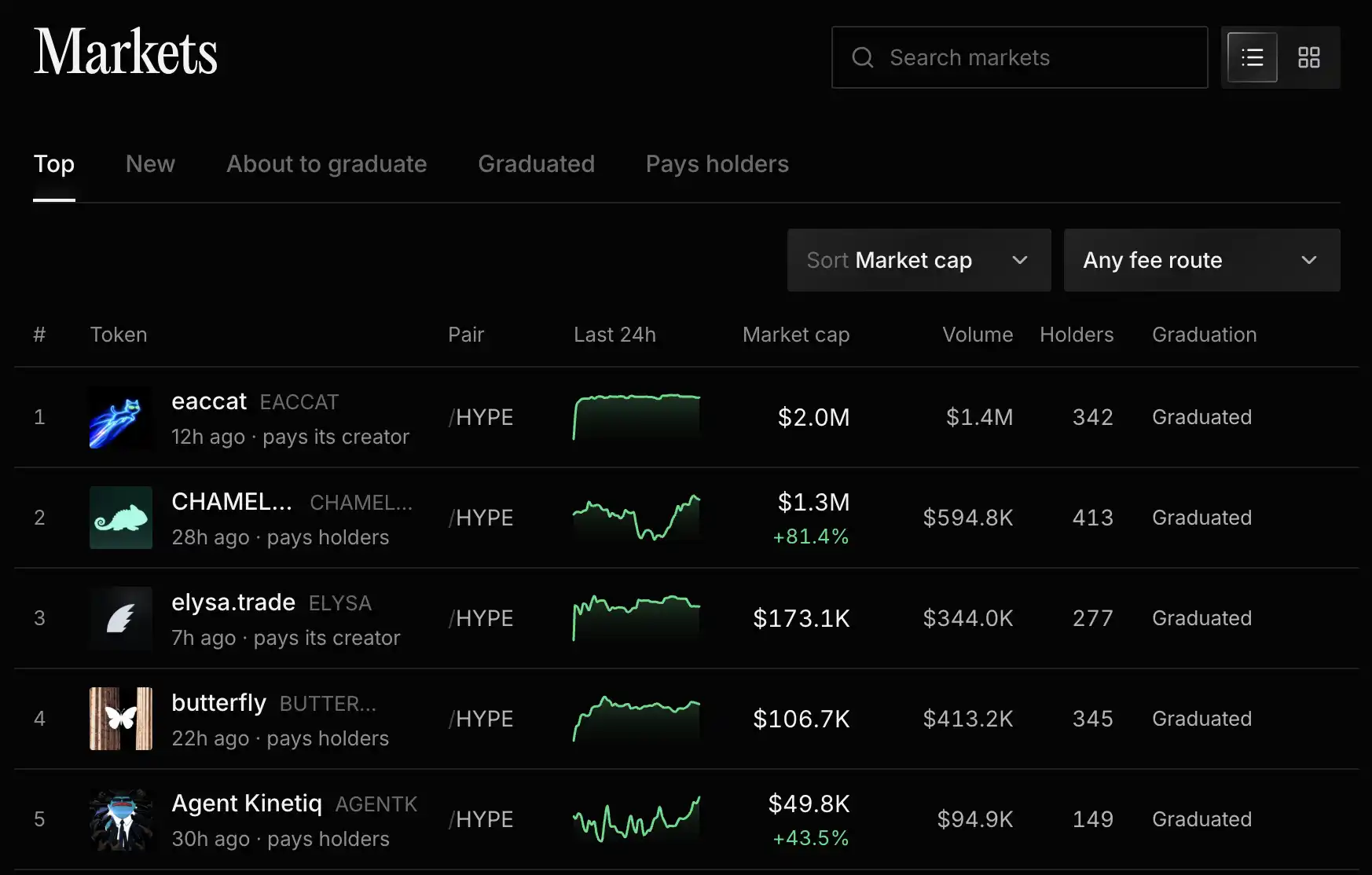
Ascend reported approximately $5.97 million in trading volume, 47,254 transactions, 873 tokens deployed and $34,808 in protocol fees in its first-day test data. Those figures describe testing, not trading after Elysium’s scheduled launch.
Ascend’s proposed fee structure temporarily holds back part of early creator fees, releasing them as projects meet conditions. At higher market-cap ranges, creators receive more of the base trading fee while the protocol’s share falls. Creators can direct their share toward holder rewards, token buybacks or a combination.
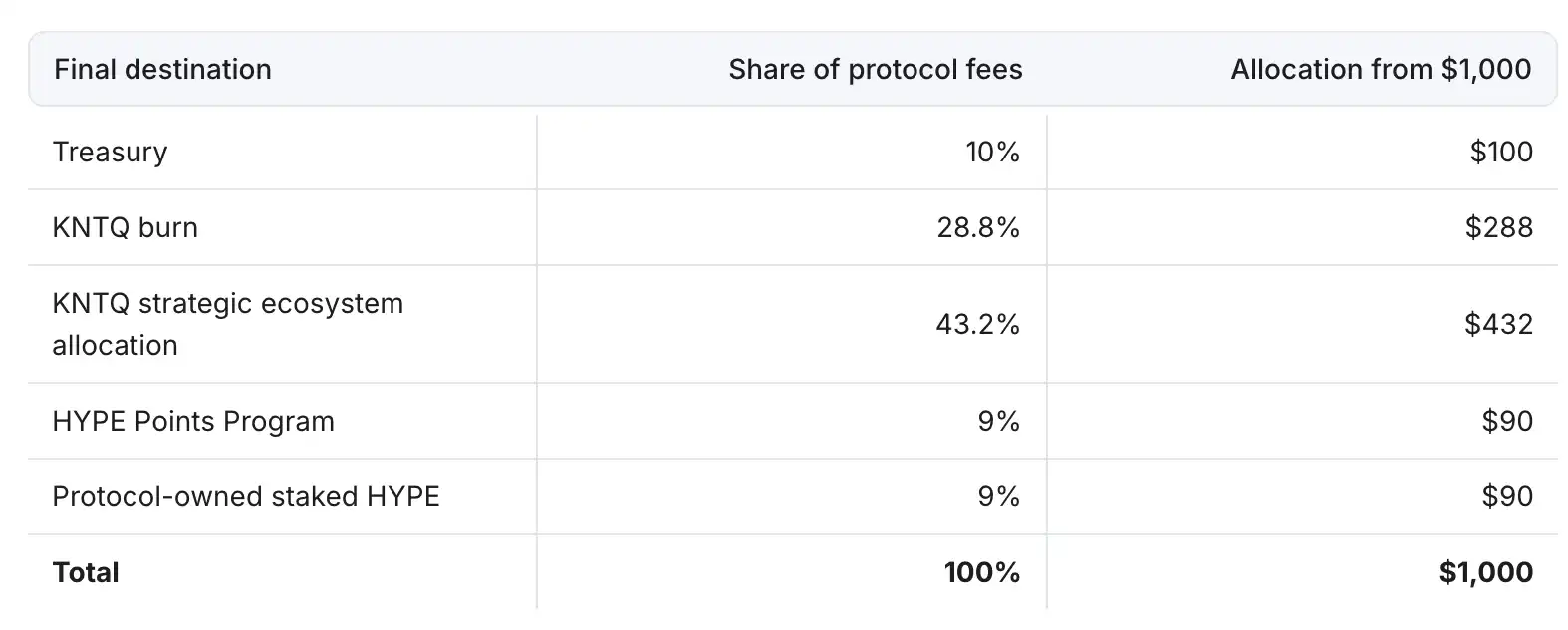
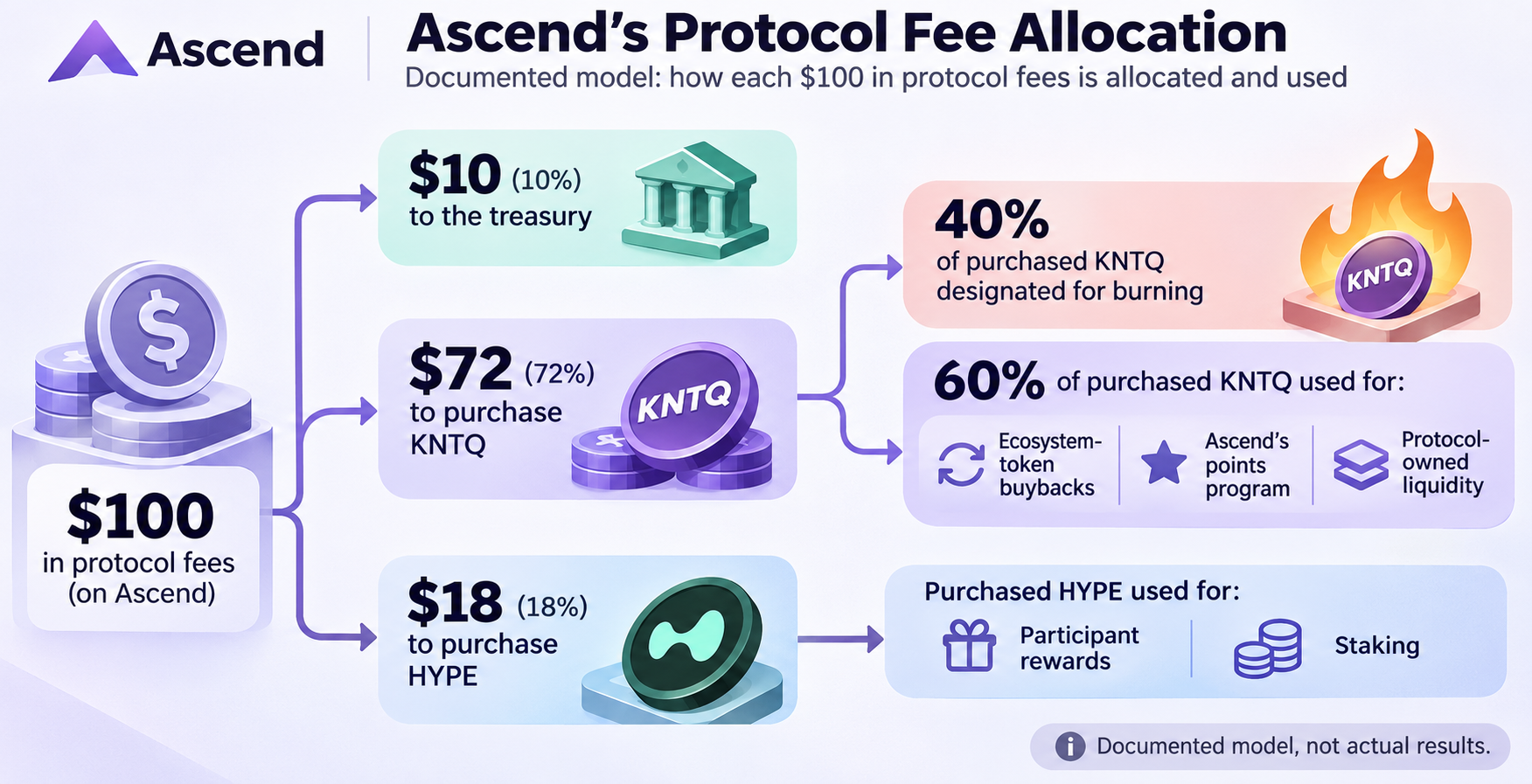
Ascend does not plan a separate platform token; it uses KNTQ. Under its documented allocation model, each $100 in protocol fees sends $10 to the treasury, $72 to KNTQ purchases and $18 to HYPE purchases. Of the KNTQ bought, 40% is to be burned; the remaining 60% supports ecosystem-token buybacks, Ascend’s points program and protocol-owned liquidity. Purchased HYPE is designated for participant rewards and staking.
Omnia said Elysium would use 50% of sequencer revenue to buy back KNTQ. Ascend plans to put its share of Elysium sequencer revenue toward builder support, including grants and preparation for HyperCore spot listings. It also describes a vault in which deposited kHYPE generates staking yield used to buy eligible ecosystem tokens for distribution to participating stakers. These are described mechanisms, not guaranteed outcomes for token holders.
Montra takes a different approach: it has its own token, MONTRA. Its standard token-launch process is built on Uniswap v4, with creator-fee options covering a team wallet, multiple recipients or token holders. Under its buyback design, 70% of the relevant protocol share buys and burns MONTRA, while 30% goes to its treasury. Montra has opened pre-trading; the original report said two tokens there had market capitalizations above $1 million.
Montra allocates 25% of MONTRA’s total supply to an airdrop, split into five groups of 5% each: existing active HYPE, KNTQ and Elysium users; early Montra creators and traders; participants who discover, trade and hold top-ten Montra tokens at the snapshot; liquidity providers; and verified creators, builder referrals and social-content contributors, with verification through its official Discord.
The proposed route to HyperCore
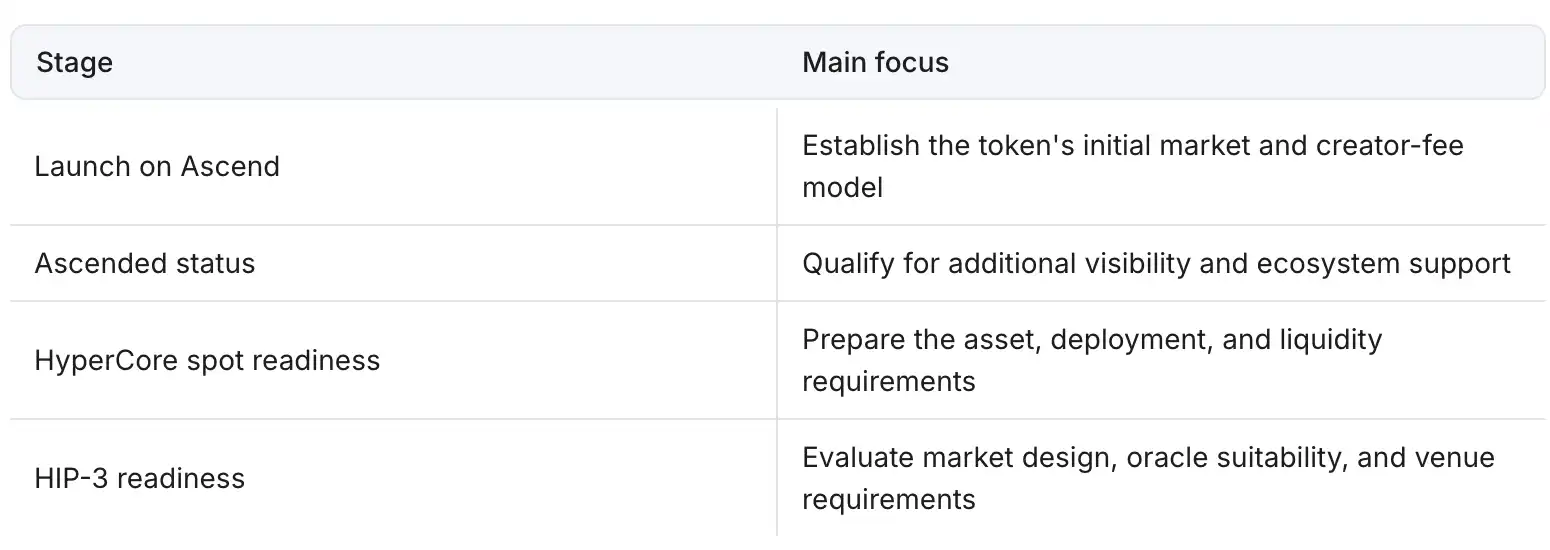
Omnia described a potential progression for projects: build attention, trading and liquidity on Elysium, then seek a HyperCore spot market and, subsequently, a perpetual market opened by a HIP-3 deployer. Ascend’s Ascended designation is intended to put eligible projects into an ecosystem-support process that includes preparation for those markets. Neither designation nor preparation amounts to a confirmed listing.
Elysium is also designing interfaces around HyperCore prices and order-book depth. The aim is to let professional market makers quote spot trades on Elysium and hedge on HyperCore. Whether those workflows and the launchpads’ incentive designs attract sustained activity remained an open question at the November 6 reporting date.