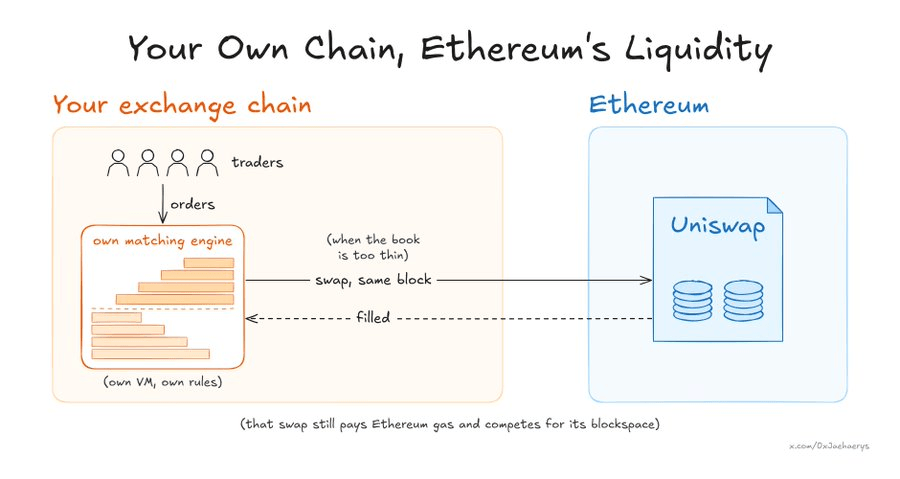
Originally reported November 14, 2026, at 18:30 (UTC+8). In an article by 0xJaehaerys, translated by 白话区块链, the Ethereum Economic Zone (EEZ) is presented as a way for connected chains to use Ethereum and one another’s resources within a single transaction. It addresses a familiar constraint for rollups: liquidity and applications may exist on L1, but using them from another chain ordinarily requires asynchronous transfers and separate transactions.
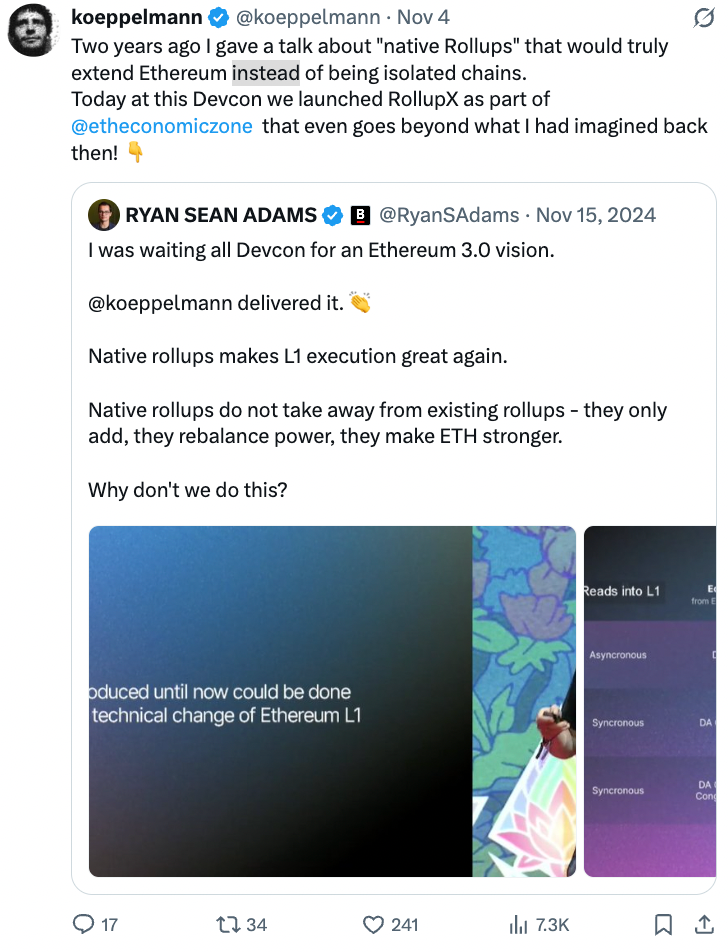
EEZ is not a new chain or a proposed Ethereum protocol upgrade. The article describes contracts on Ethereum and rules for connecting chains to them. Each connected chain can retain its own virtual machine, transaction ordering and admission rules. What they share is the Ethereum block in which a cross-chain transaction is coordinated.
What a chain must provide
Under the described design, a chain must prove its new state within one Ethereum slot—12 seconds—and roll back with Ethereum if Ethereum reorganizes. The rollback condition is meant to prevent one side of a cross-chain transaction from remaining after the other disappears. EEZ contracts use proofs and state roots rather than executing the connected chain’s transactions themselves.
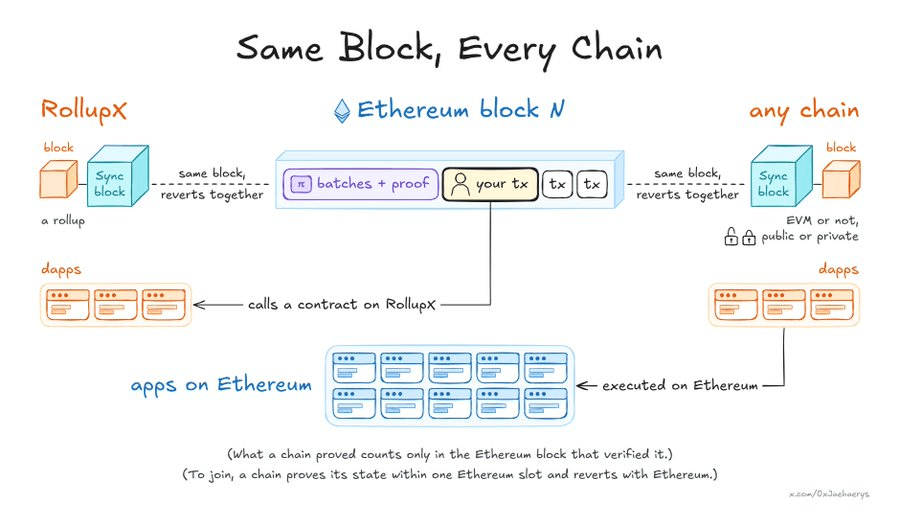
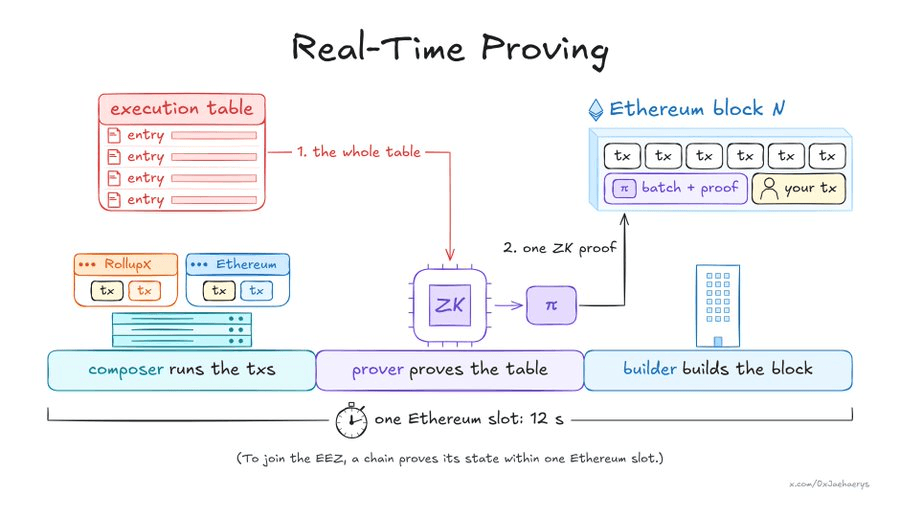
The chain’s owner chooses which proof systems to trust and how many proofs a batch requires. The article lists ZK proofs, trusted execution environments and multisignatures as possible choices; EEZ does not endorse any one of them. Citing Ethproofs, the article also says a ZisK real-time proving workload that had required 24 RTX 5090 GPUs a year earlier required four at the time of reporting. That comparison is the article’s account of proving progress, not a requirement imposed on every connected chain.
How a call crosses chains
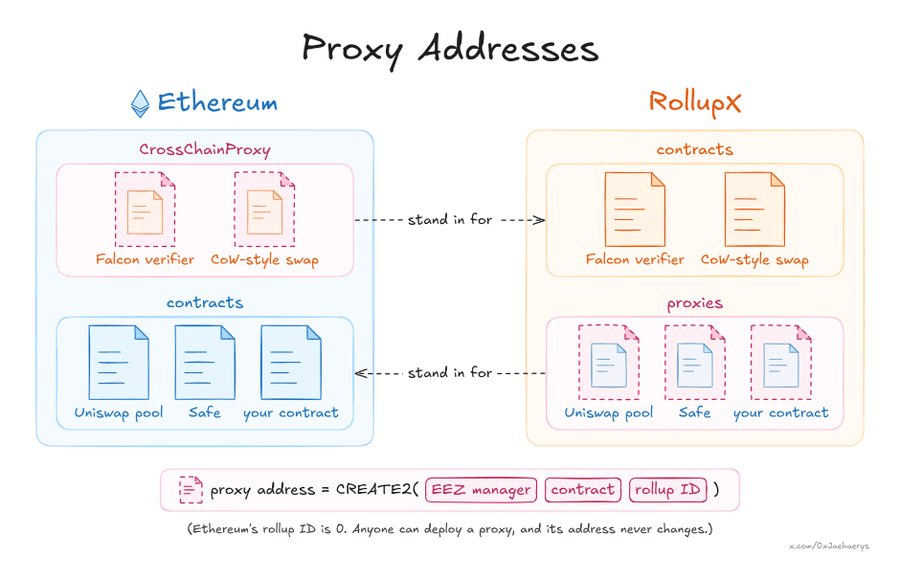
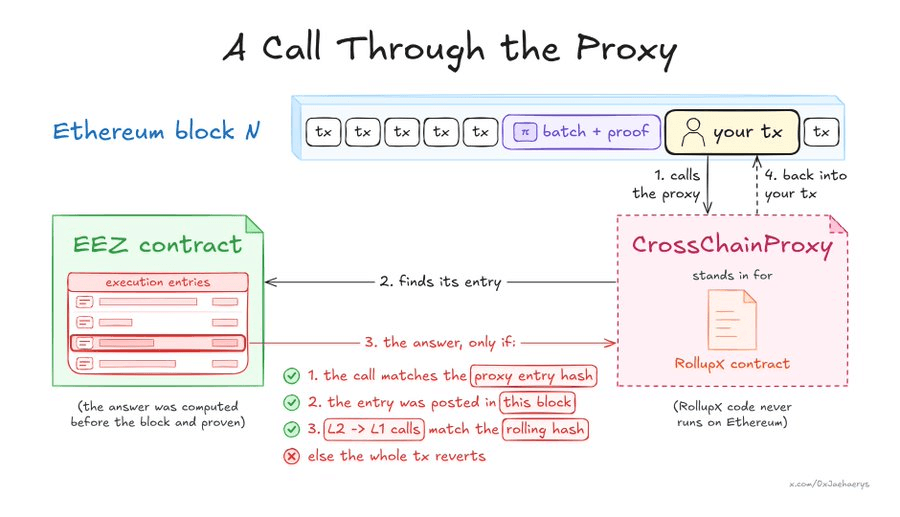
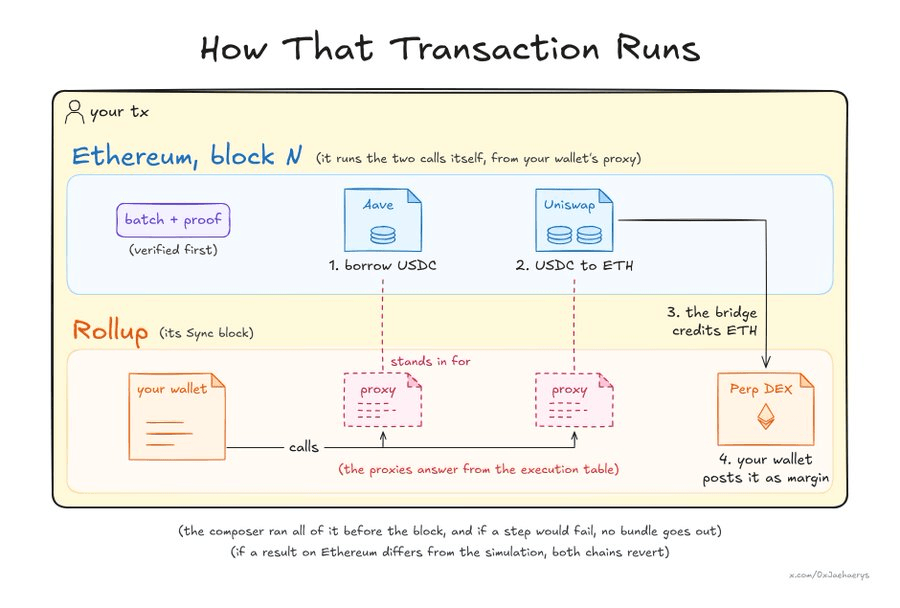
Three components carry the design: real-time proving, a composer that runs the proposed transaction across its participating chains before block inclusion, and proxy contracts that represent contracts on another chain. The article says proxy addresses are predictable using CREATE2, the EEZ contract address, the original contract address and a registered chain ID.
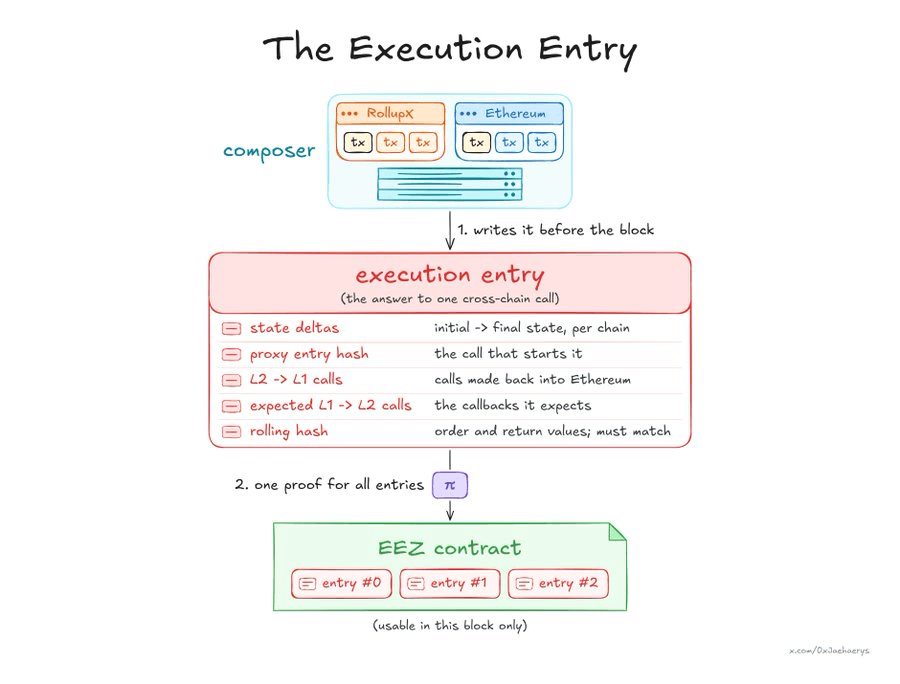
The composer records simulated cross-chain calls and their answers in an execution table, alongside the relevant state-root transitions and callback data. It sends a bundle to an Ethereum builder. The bundle begins with a postAndVerifyBatch transaction containing the connected chain’s batch, execution table and proof; the user transaction follows. The builder must include the bundle in order and in full, or omit it.
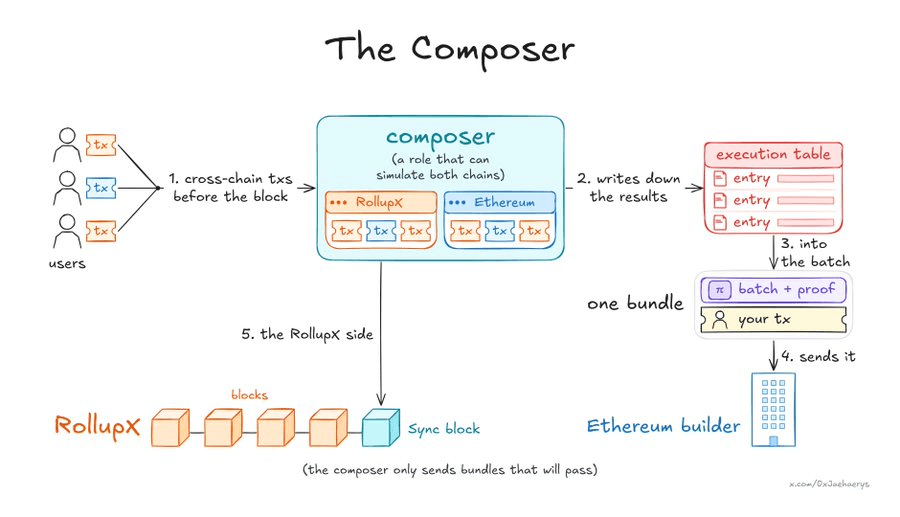
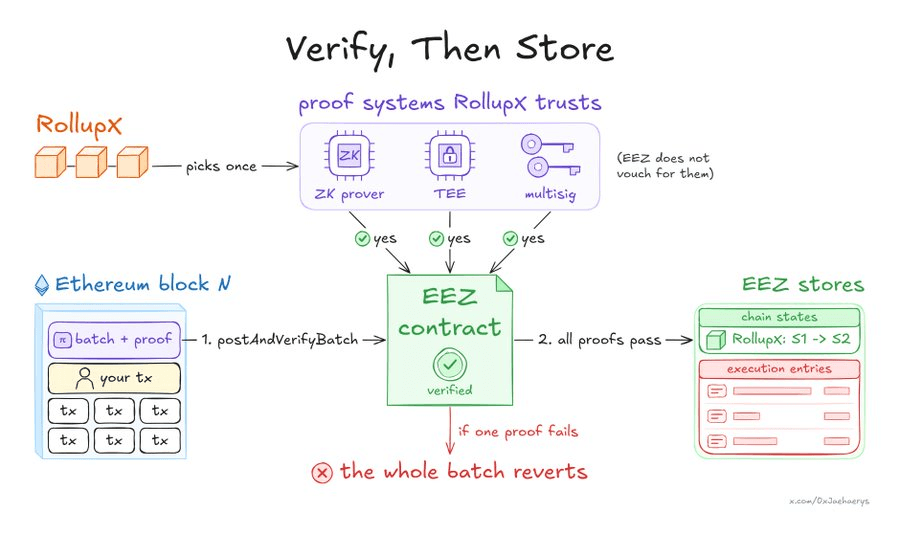
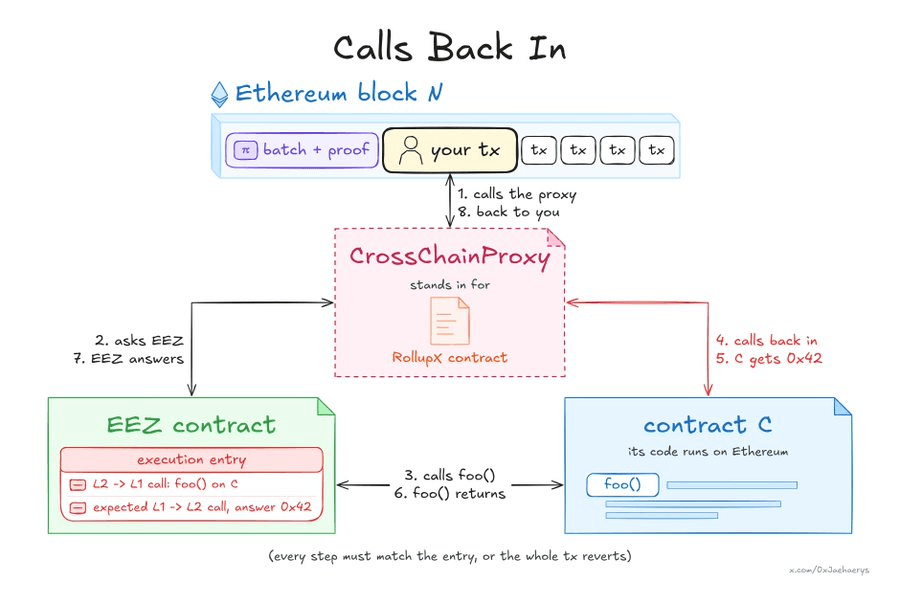
After the batch proofs are verified, a proxy can return a recorded answer only if the actual call matches the simulated one, its entry arrived with the batch in the same block, and the callback checks match. The connected chain executes its cross-chain portion in a sync block tied to the Ethereum block. If the bundle misses that block, the sync block rolls back. The article says calls can run from L1 to L2, L2 to L1, or between connected L2s.
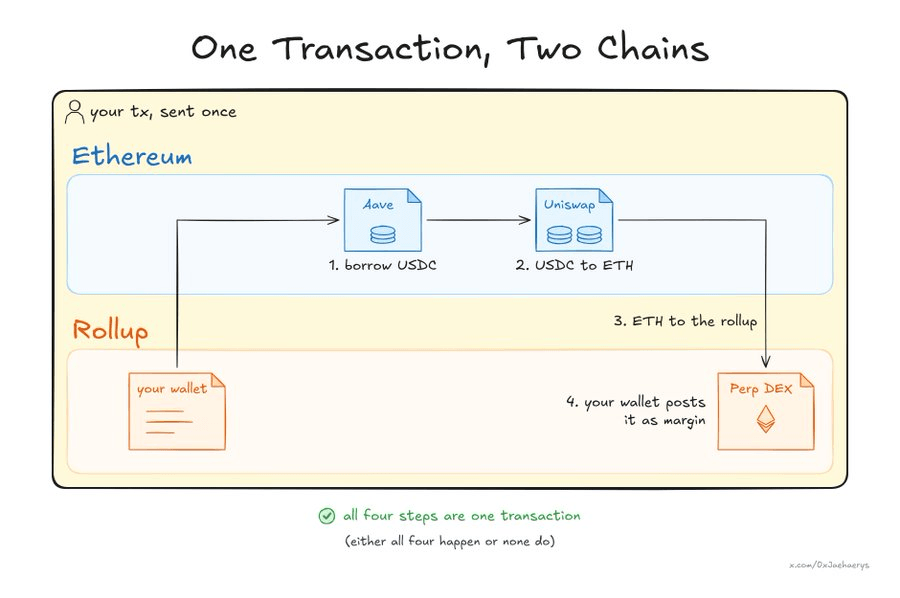
As an illustration, the author describes borrowing USDC through Aave on Ethereum, swapping it for ETH through Uniswap, and depositing the ETH as margin on a rollup in one coordinated transaction. The example requires collateral to have been placed at the borrower’s Ethereum-side wallet proxy beforehand. The user pays the L1 gas cost through a higher tip to the composer. According to the article, a failed simulation is not submitted, while a mismatch during Ethereum execution causes the operations on both sides to revert.
Reported examples and limits
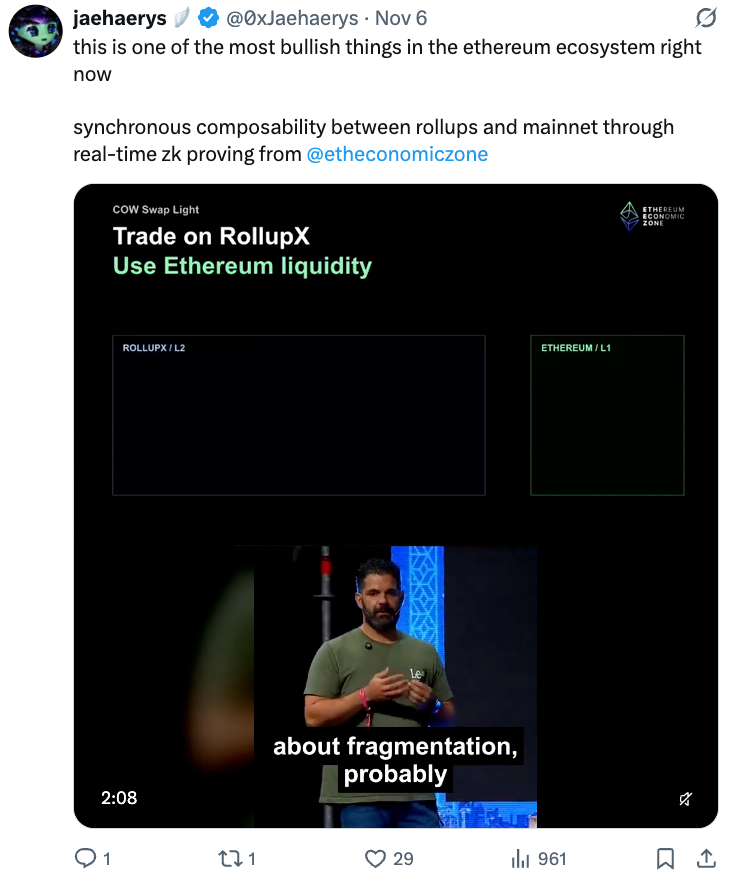
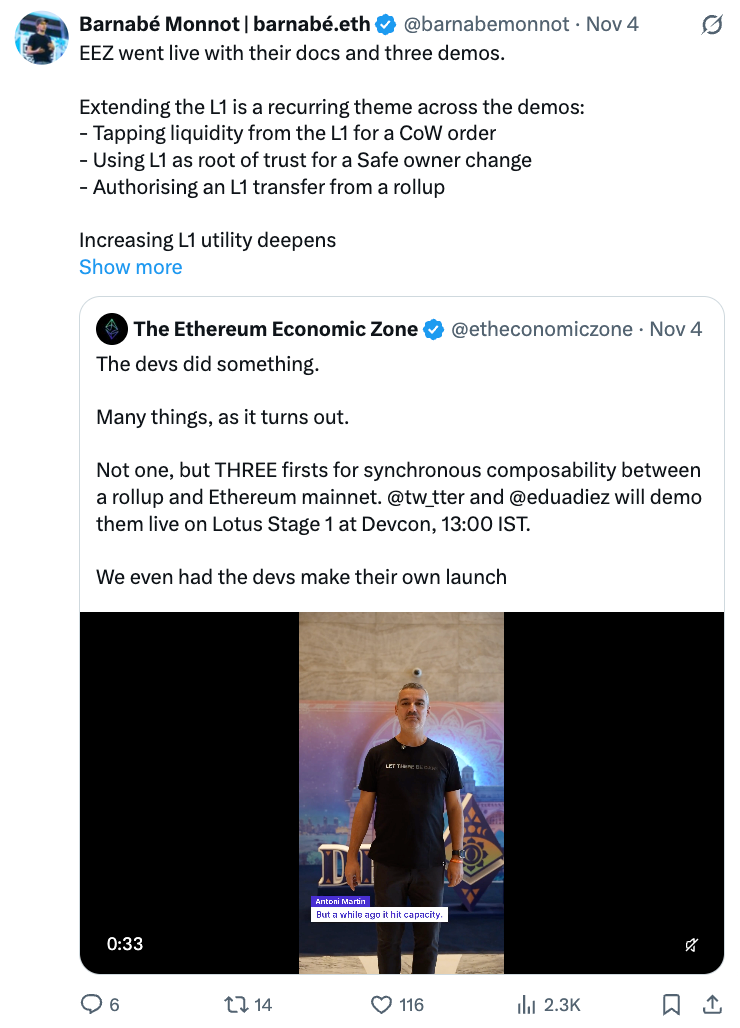
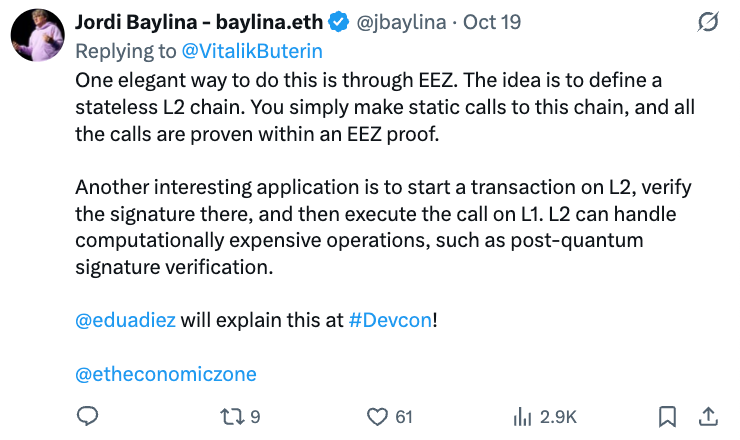
The article describes transactions on RollupX, which it calls a test rollup on Ethereum mainnet: a purchase from an Ethereum Uniswap pool that produced wrapped CRV on RollupX in the same transaction; a Safe setup that reads its owner list from Ethereum; and a Bermuda Bay privacy-pool swap executed against Uniswap V3 liquidity on L1. It also describes a demonstration in which verification of a Falcon signature on a rollup authorized an L1 Safe payment. These are examples reported by the article, not evidence that EEZ has become an activated Ethereum-wide upgrade.
The trade-offs remain material. The article says a chain cannot simultaneously have fast blocks, synchronous Ethereum calls and decentralized sequencing; it must choose two. For a chain producing blocks every 200 milliseconds, its example allows an Ethereum-facing sync block only once every 60 blocks. Cross-chain calls also pass through a composer that must see the unencrypted transaction before inclusion, giving the composer and builder an opportunity to capture MEV.
Finally, the article estimates that validators built 7% of Ethereum blocks themselves, without an external builder, and says synchronous calls could not occur in those slots. It reports that, during EEZ’s first month, every EEZ batch landed in a block from an external MEV-Boost builder; 56% landed in Titan-built blocks, compared with Titan’s usual 48% share. Those figures describe the period covered by the original report, not a current network measurement.
Source: panewslab.com (originally published 2026-11-14 18:30 UTC+8)