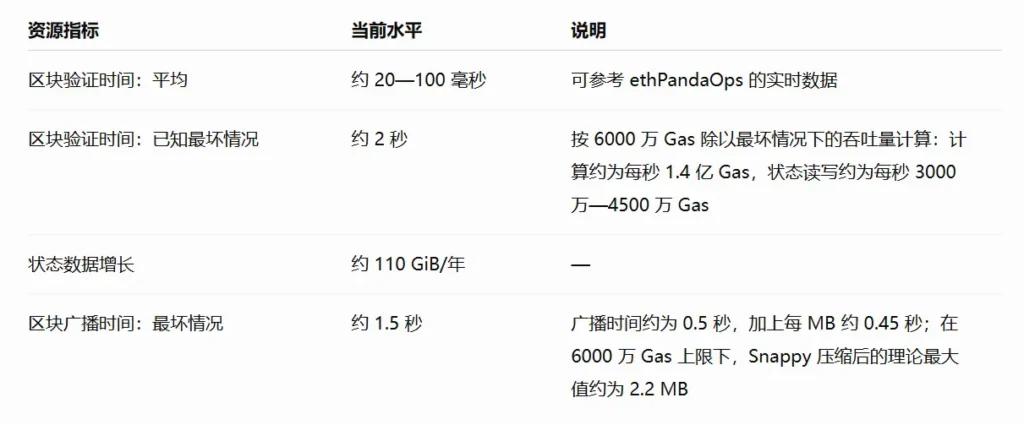
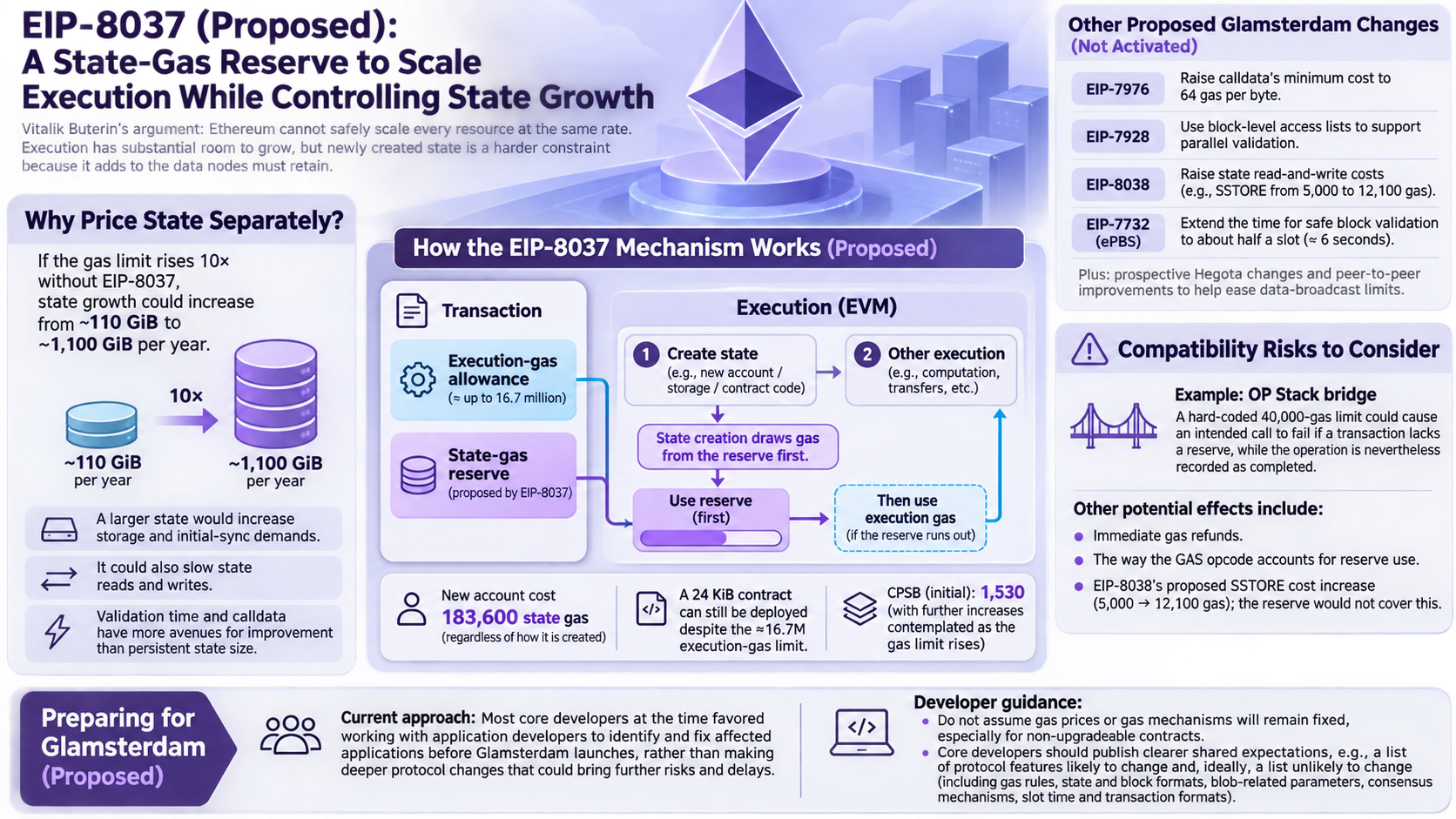
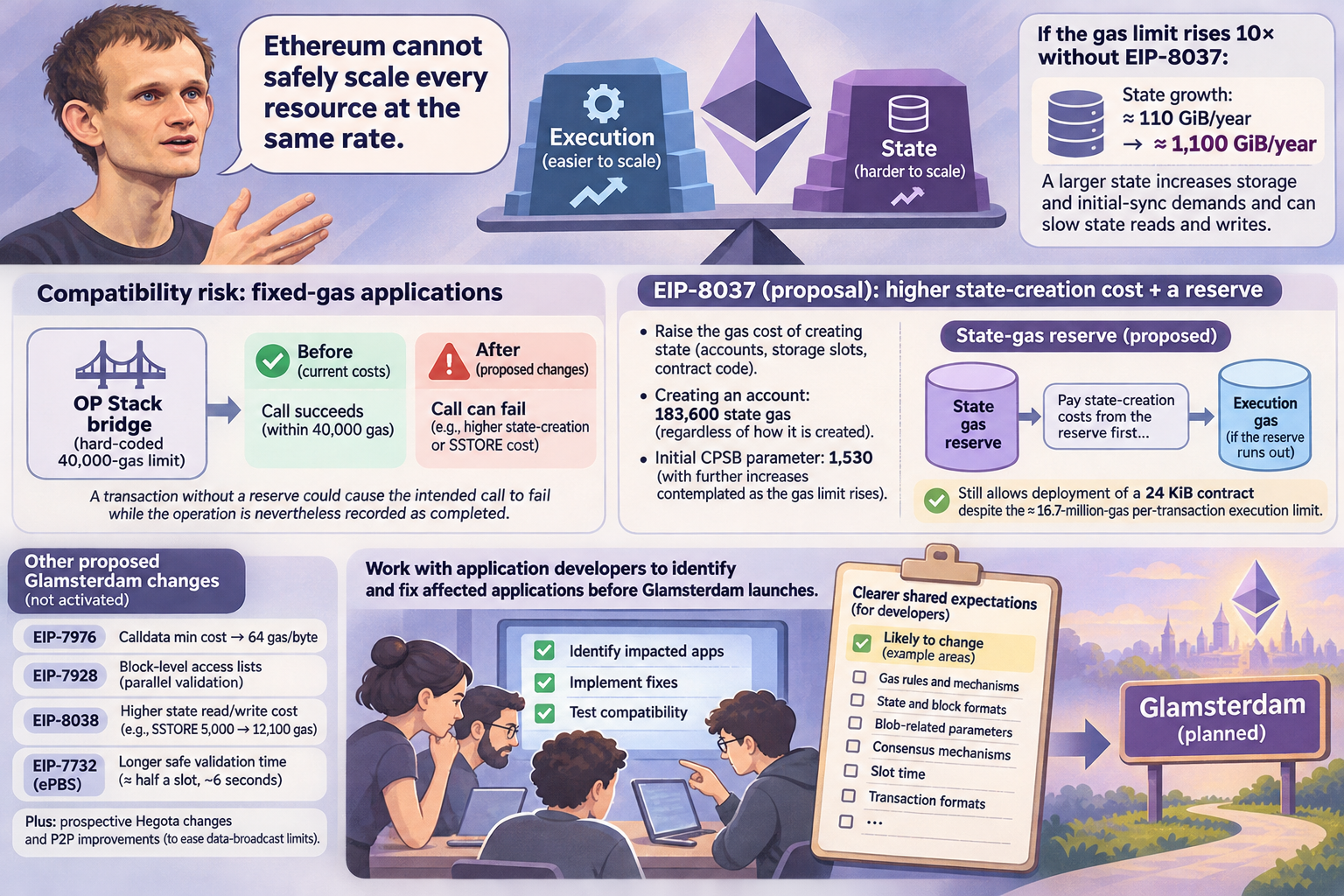
In remarks reported on November 17, 2026, Vitalik Buterin argued that Ethereum cannot safely scale every resource at the same rate. Execution capacity may have substantial room to grow, he said, but newly created state remains a harder constraint because it adds to the data nodes must retain. EIP-8037 is a proposal, not an activated rule: it would raise the gas cost of creating state while introducing a way to reserve gas for those costs.
Why price state separately?
Buterin estimated that raising Ethereum’s gas limit tenfold without EIP-8037 could increase state growth from about 110 GiB to 1,100 GiB per year. A larger state would increase storage and initial-sync demands and could slow state reads and writes. In his assessment, validation time and calldata have more avenues for improvement than persistent state size.
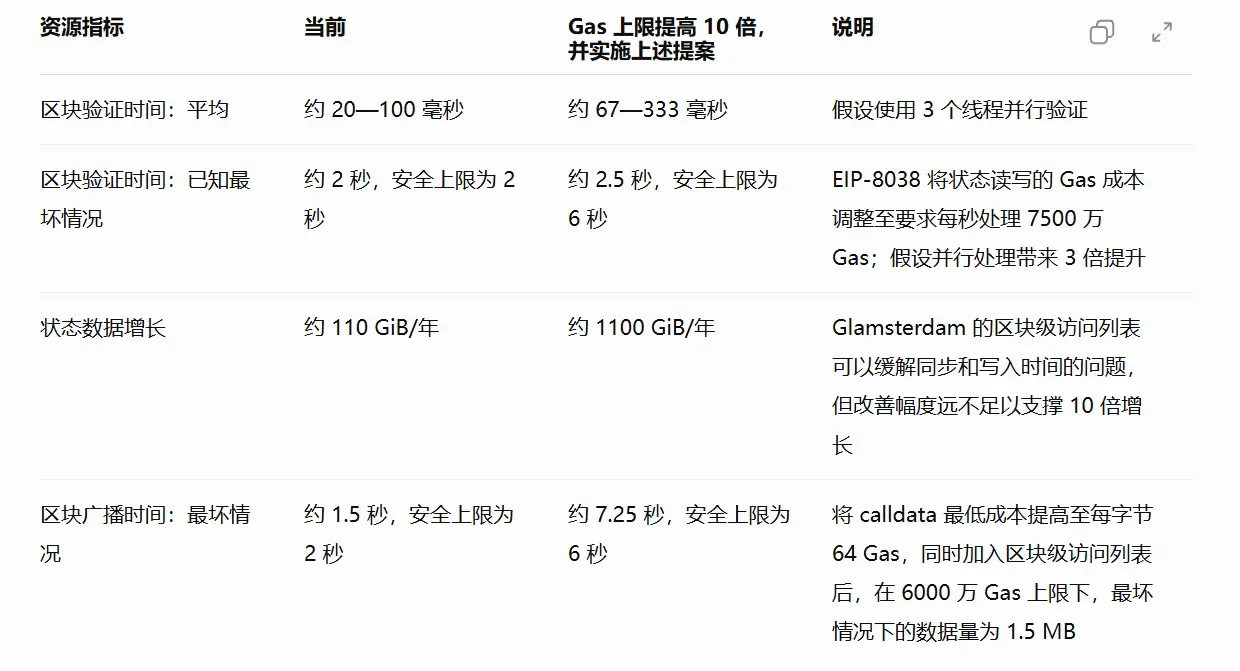
He placed EIP-8037 alongside other proposed Glamsterdam changes: EIP-7976 would raise calldata’s minimum cost to 64 gas per byte; EIP-7928 would use block-level access lists to support parallel validation; EIP-8038 would raise state read-and-write costs; and EIP-7732, or ePBS, would extend the time available for safe block validation to roughly half a slot, or six seconds. He also cited prospective Hegota changes and peer-to-peer improvements as possible ways to ease data-broadcast limits. These are parts of his scaling argument, not claims that the upgrades have been deployed.
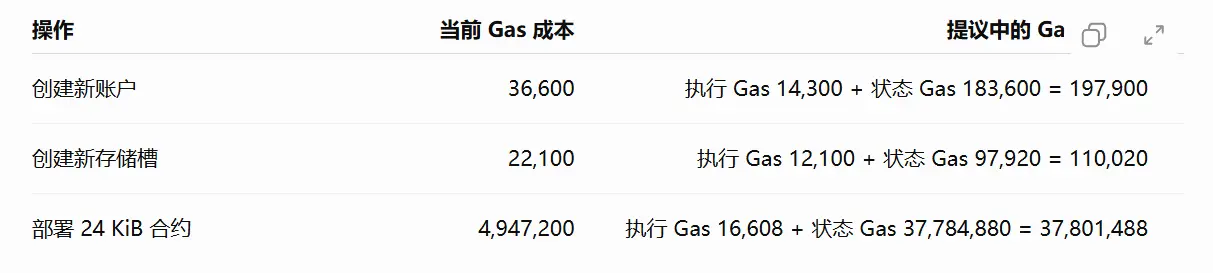
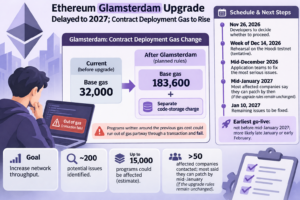
EIP-8037 would charge more for new storage slots, contract code and accounts. Under the proposal, creating an account would cost 183,600 state gas regardless of how it is created; Buterin contrasted that with a transaction-based route that currently avoids even the pre-Glamsterdam 25,000-gas new-account charge. Its initial CPSB parameter would be 1,530, with further increases contemplated as the gas limit rises.
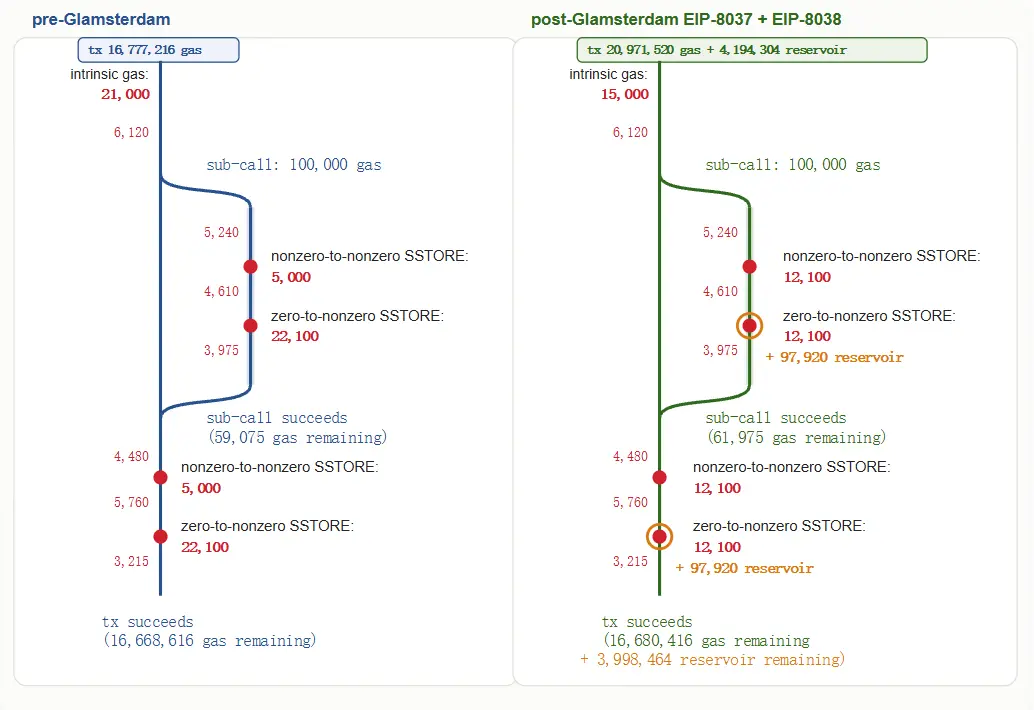
What the reserve would—and would not—protect
The proposal’s state-gas reserve would let a transaction pay state-creation costs outside its ordinary execution-gas allowance. State creation would draw from the reserve first, then from execution gas if the reserve ran out. A child call could access the full reserve even when its parent limited the execution gas passed to it. Buterin said this would still permit deployment of a 24 KiB contract despite the approximately 16.7-million-gas per-transaction execution limit.
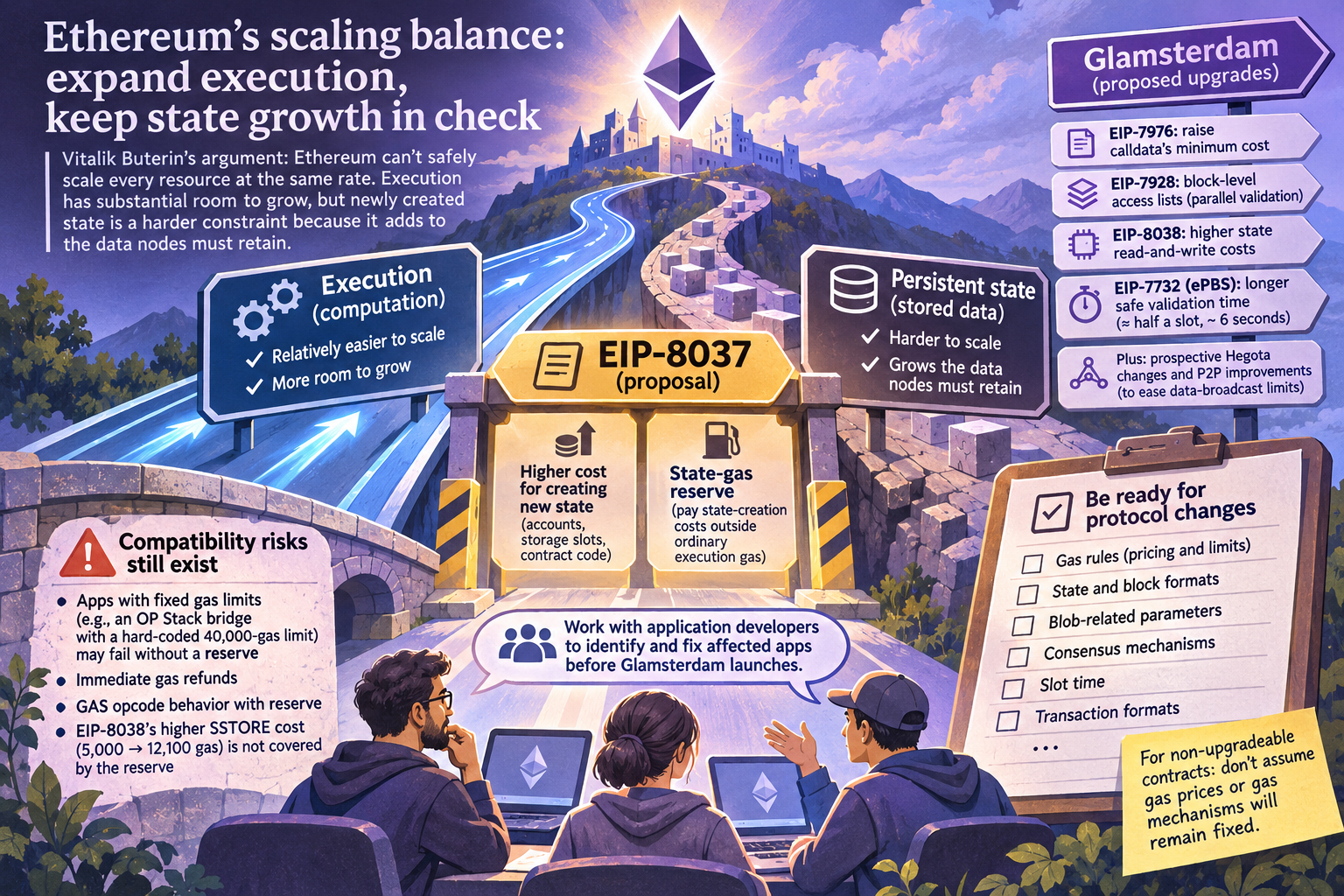
That mechanism does not remove compatibility risks. Some applications use fixed gas limits or configurations that are difficult to change. Buterin highlighted an OP Stack bridge mechanism with a hard-coded 40,000-gas limit: he warned that a transaction without a reserve could cause an intended call to fail while the operation was nevertheless recorded as completed. He also identified possible effects from immediate gas refunds, the way the GAS opcode accounts for reserve use, and EIP-8038’s proposed increase in SSTORE cost from 5,000 to 12,100 gas. The reserve would not cover that last increase.
Buterin discussed alternatives, including changing refund timing, adding another reserve, bringing a basic EIP-8141 frame-transaction type into Glamsterdam, and exempting older contracts subject to compensating charges. Each carries costs or other compatibility risks, he argued. In particular, merely choosing milder initial EIP-8037 parameters would not, in his view, solve the cited OP Stack bridge problem because its limit is already tight. EIP-8141 could eventually make execution and state-gas limits explicit, but he described it as otherwise arriving in a later fork.
Preparing contracts for protocol changes
According to Buterin, most core developers at the time favored working with application developers to identify and fix affected applications before Glamsterdam launches, rather than making deeper protocol changes that could bring further risks and delays. He said Glamsterdam had already been postponed, public discussions had taken place, and work to find and address problems had begun. That is a description of the position he reported, not a guarantee that every affected application will be fixed.
For developers of non-upgradeable contracts, his immediate advice was not to assume gas prices or gas mechanisms will remain fixed. He also urged core developers to publish clearer shared expectations: a list of protocol features likely to change and, ideally, a list unlikely to change. His own preliminary list included gas rules, state and block formats, blob-related parameters, consensus mechanisms, slot time and transaction formats. These were possible future changes, not announced activations. His broader point was that application developers need those expectations early enough to design for compatibility.