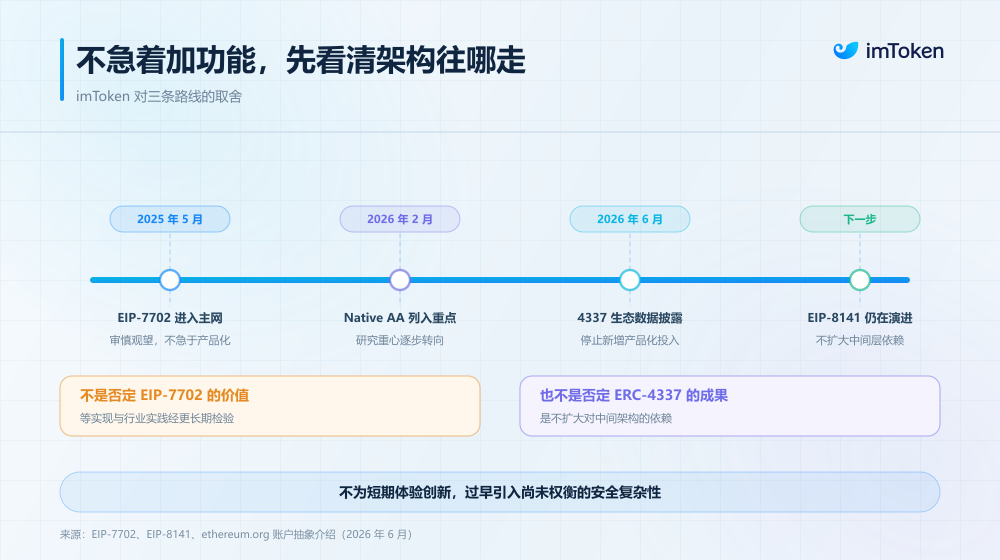
In an account-abstraction assessment published on November 20, 2026, wallet developer imToken said it was taking a cautious approach to EIP-7702, stopping new product investment in ERC-4337 and shifting its research focus toward native account abstraction. Its reasoning centers on a wallet-security question: when an account becomes programmable, can users still understand what they have authorized?
Why the account model matters
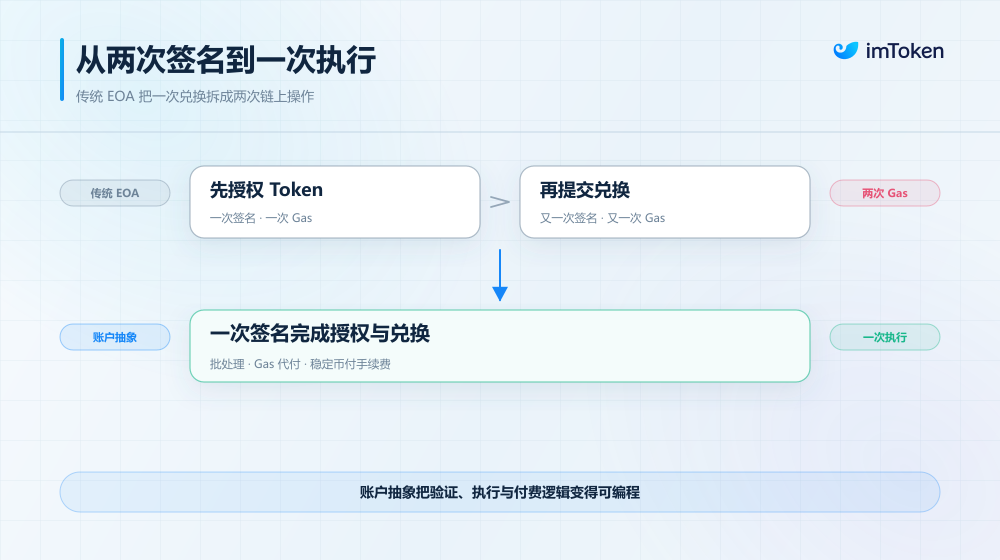
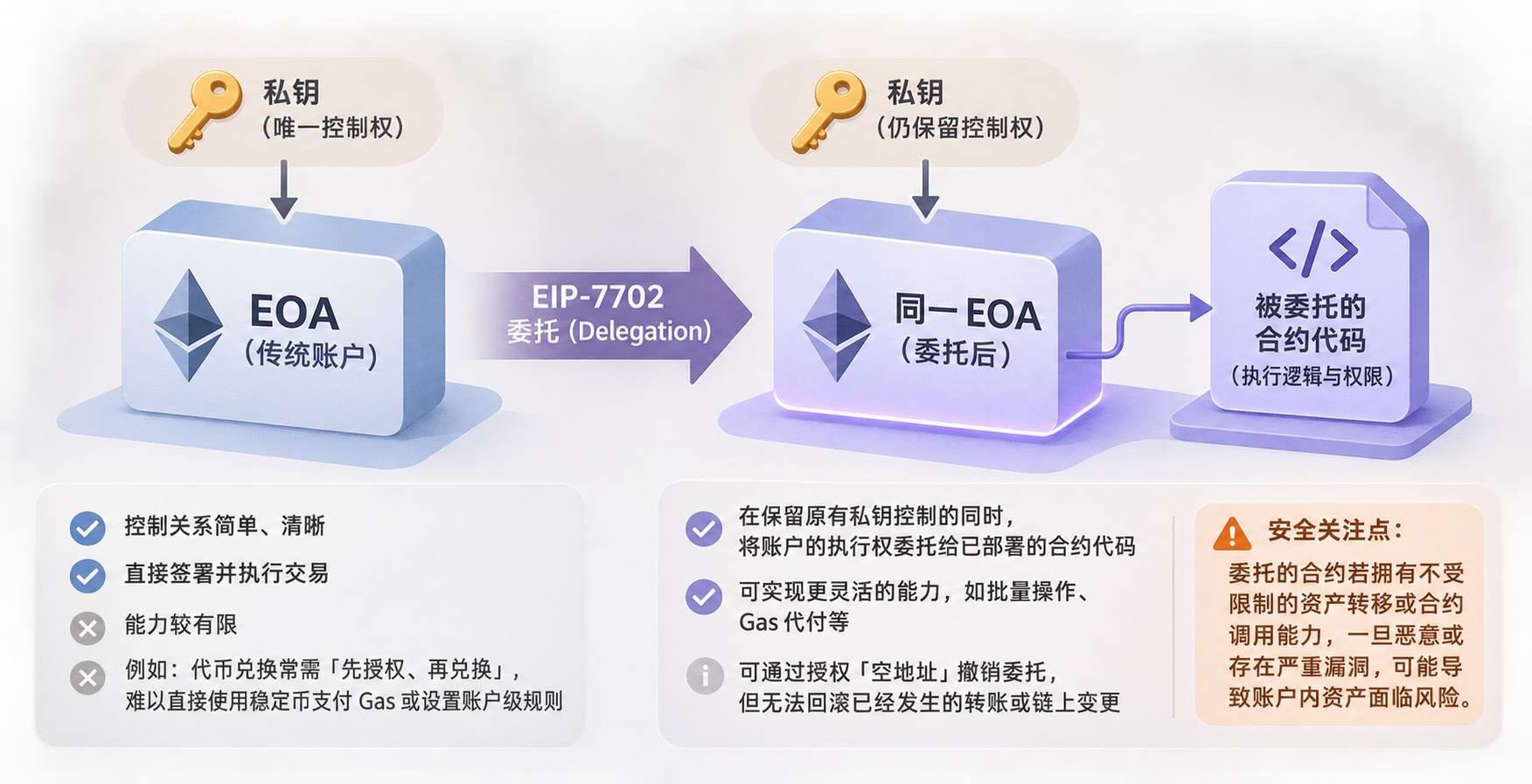
A conventional externally owned account (EOA) is controlled by a private key. That makes its basic control relationship relatively straightforward, but it limits what the account can do on its own. imToken points to familiar friction: a token swap may require a separate approval and swap transaction, while paying gas with a stablecoin or setting account-level spending rules requires capabilities beyond the traditional EOA model.
Account abstraction aims to make validation, execution and fee payment more flexible. imToken argues that this flexibility also expands the consequences of an unclear authorization: a confirmation might affect not just one transaction, but the code or permissions governing later account activity.
EIP-7702: delegation on an existing account
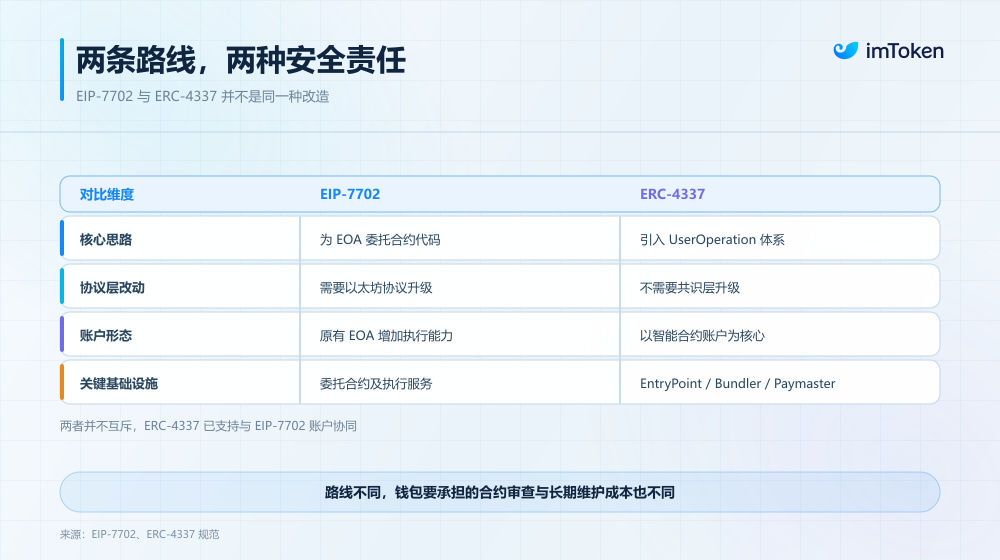
EIP-7702 is already on Ethereum mainnet, according to imToken. It lets an EOA authorize delegation to deployed contract code, enabling capabilities such as batched operations and sponsored gas payments. The security question is which code receives that authority. If delegated code has unrestricted ability to transfer assets or call contracts, a malicious or seriously flawed implementation could put assets across the account at risk.
That differs from a token approval, whose permissions are generally defined by a particular token, spender and allowance—though imToken notes that an unlimited token approval can also cause severe losses. EIP-7702 does not remove control from the EOA’s original private key; that key may still bypass some signing policies imposed by delegated code. A user can revoke delegation by authorizing an empty address, but revocation cannot undo transfers or other onchain changes that have already occurred.
imToken says it is therefore not rushing to introduce EIP-7702 broadly into its products. It wants stronger practices around explaining delegation, reviewing contracts, displaying permissions and handling abnormal situations before exposing ordinary users to it at scale.
ERC-4337: an application-layer coordination chain
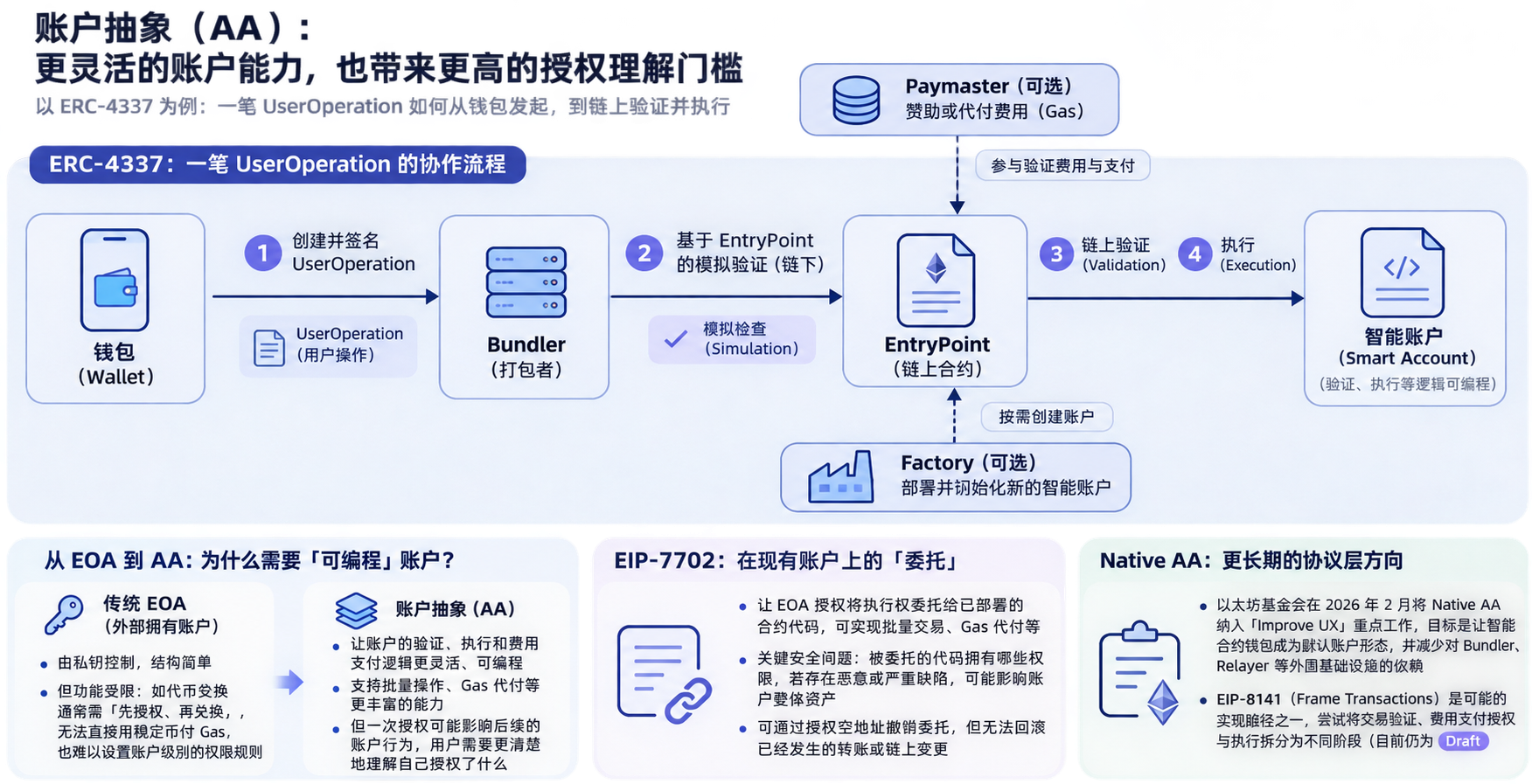
ERC-4337 takes a different route through smart accounts and supporting infrastructure. As imToken describes it, a wallet signs a UserOperation; a bundler checks it using the EntryPoint’s simulation logic, packages it and submits it onchain. The EntryPoint then performs validation before execution. A paymaster may handle sponsored fees, while a factory may deploy and initialize a new account.
This division of work provides flexibility, but imToken says it also brings compatibility, reliability and ongoing security-review costs. Account implementations, signing rules, modules, EntryPoint versions and surrounding services may all affect future migration. Its decision to stop new ERC-4337 product investment is not a claim that the approach has failed; imToken says production use has demonstrated the feasibility of smart accounts.
Native AA remains a proposal path
imToken says the Ethereum Foundation identified native account abstraction as a priority within its “Improve UX” work in February 2026, with a longer-term goal of making smart-contract wallets the default account form and reducing reliance on surrounding infrastructure. It highlights EIP-8141, or Frame Transactions, as one possible route: separating transaction validation, fee-payment authorization and execution into stages.
EIP-8141 was still a Draft in imToken’s November 2026 assessment—not a deployed upgrade. imToken also cautions that native support would not eliminate the need to audit account-validation code or test new validation and payment mechanisms. Its stated choice is to study that longer-term direction while weighing what existing account-abstraction systems would require wallets to maintain and users to understand.