On November 23, 2026, Solana introduced solana.ai, a platform that groups tools for autonomous AI agents to trade digital assets, manage wallets, make payments, and use computing services through the Solana blockchain. The Solana Foundation is presenting the network as an execution layer for those agents, spanning payments, trading, confidential computing, and decentralized infrastructure.
The release is a product and developer-infrastructure offering, not a change to consensus rules. Some tools were described as ready for builders; confidential computing was not.
What the platform is for
According to the official website, solana.ai gives developers infrastructure for AI applications that can carry out financial transactions and buy online services without human approval for every action. The same day, the Solana account posted urging developers to start building.
At Breakpoint 2026, the Foundation’s presentation said more than 120 teams were already building AI products in the Solana ecosystem.
On November 9, the Foundation had listed AI inference and stablecoin payments among 11 startup opportunities, with grants and technical support offered through its Builder Program. That list identified opportunities. It was not itself an activation of the solana.ai components described on November 23.
Toolkit, Milo, and pay.sh
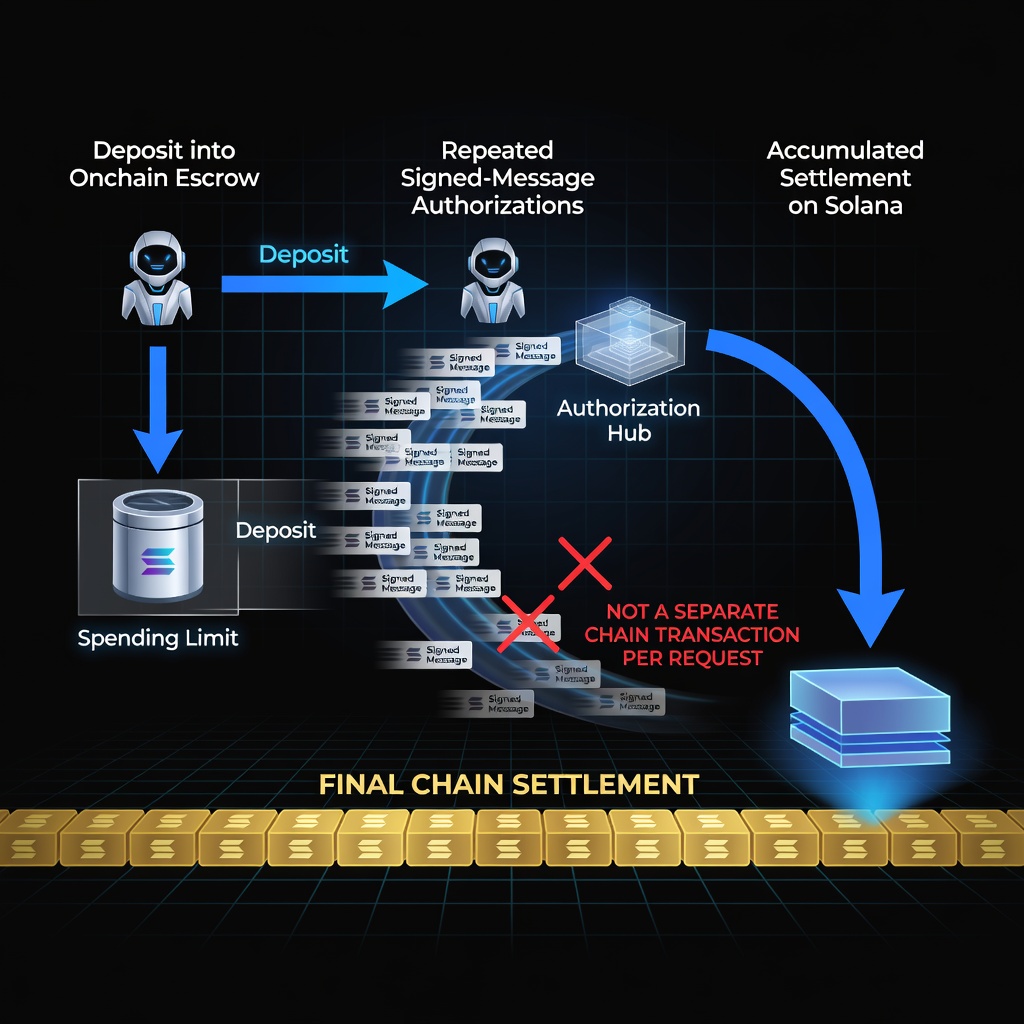
The Solana AI Toolkit on the platform includes the open-source Solana Agent Kit, a Model Context Protocol server, an agent registry, and developer resources for connecting AI applications to blockchain services. Through those tools, developers can create agents that transfer tokens, execute swaps, manage digital assets, and interact with decentralized-finance protocols.
Milo, showcased on the website, is an autonomous trading agent designed to operate around the clock. The demonstration shows software monitoring market conditions and executing trades with a connected wallet. The account does not report Milo’s trading volume, returns, or any requirement that applications use it.
Another product, pay.sh, lets AI agents purchase access to online services using USDC without creating conventional user accounts or managing separate API subscriptions. Solana says the network can settle payments in approximately 200 milliseconds, so agents can pay for individual requests as they use a service. That figure is Solana’s stated settlement time, not a published measurement for every pay.sh payment.
Payment Channels: authorizations are not the same as settlement
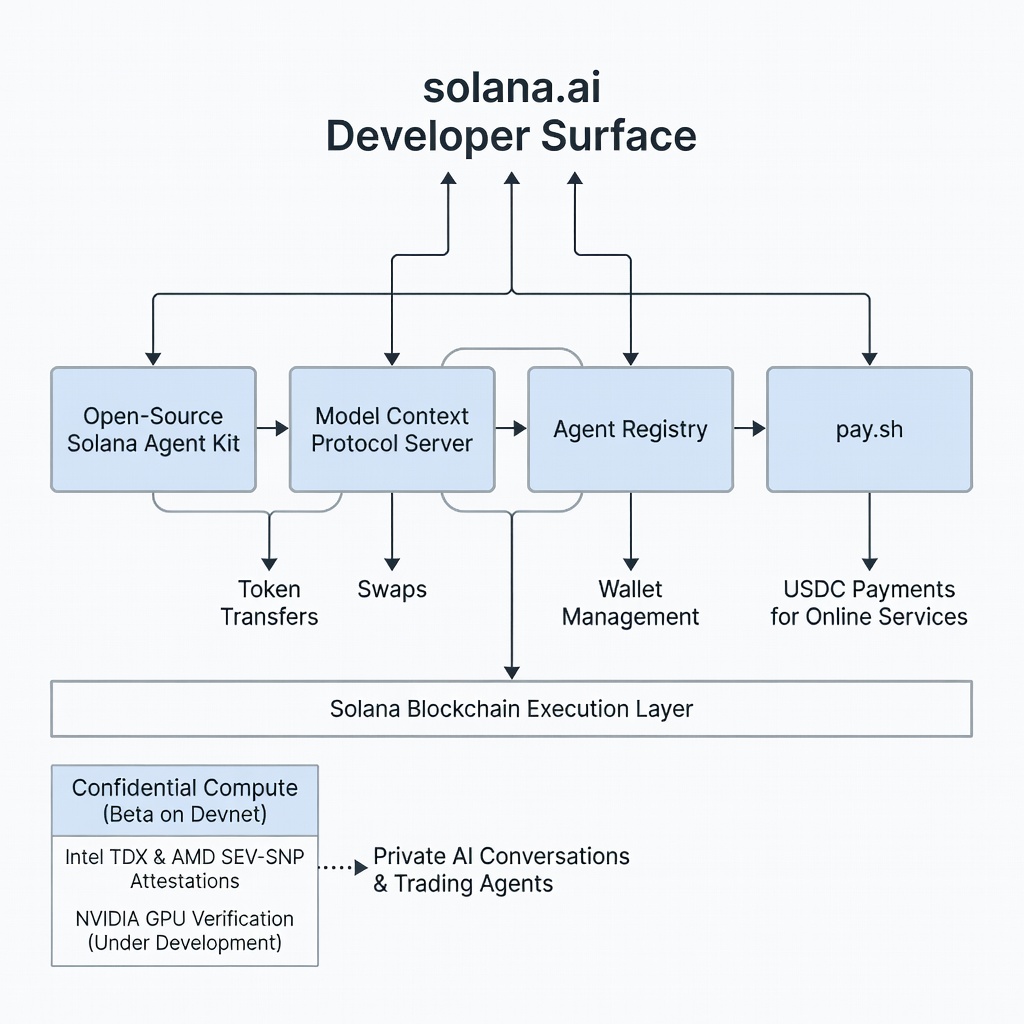
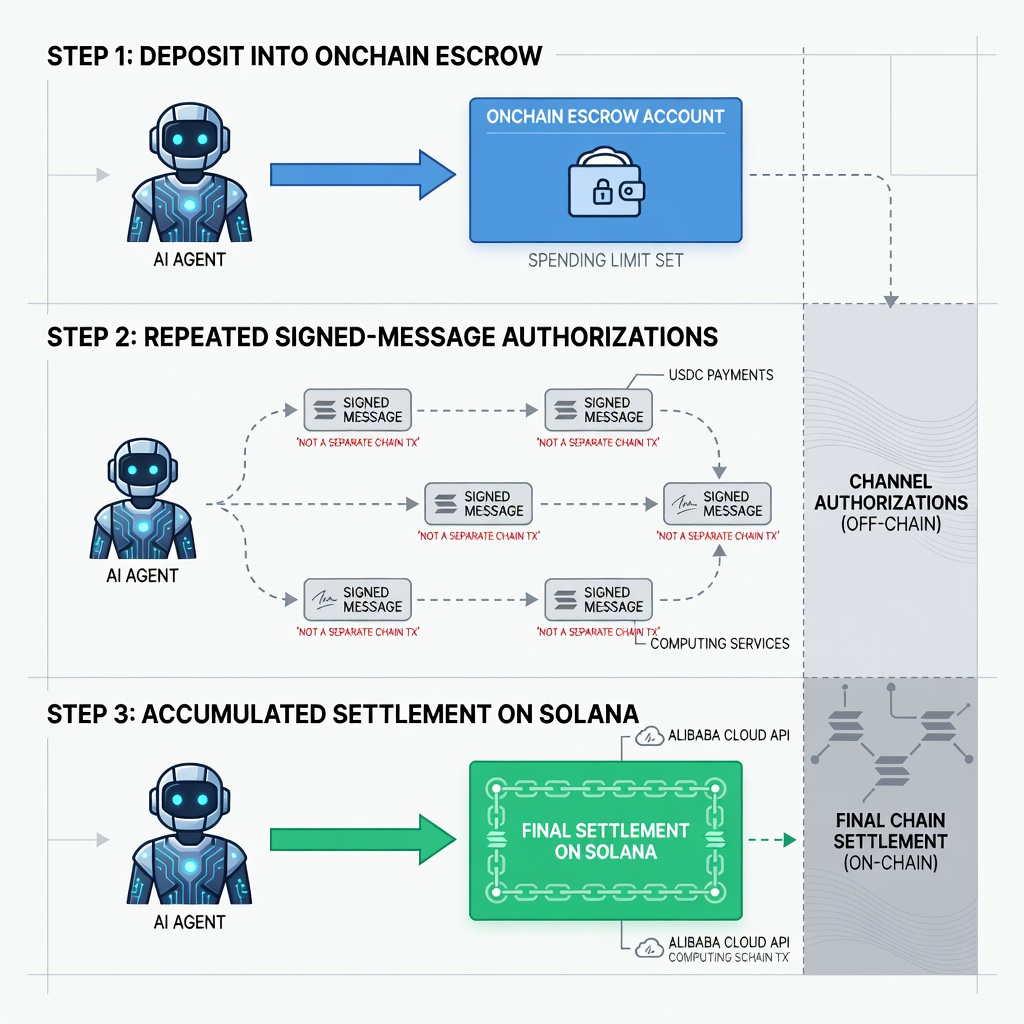
Payment Channels let agents make frequent small payments without submitting a separate blockchain transaction for every request. An agent deposits funds into an onchain escrow account and sets a spending limit. Individual payments are authorized through signed messages. The accumulated amount is settled on Solana after the session ends.
In its September announcement, the Foundation reported processing more than 1 million payment updates per second during testing with 100,000 wallets. The benchmark was described as capacity for more than 80 billion payments in 24 hours, at an estimated processing cost of $0.0078 per million payments. Those figures concern payment authorizations handled through channels. Final blockchain settlement takes place separately and was not reported at that rate.
Alibaba Cloud was named as a launch partner, with its API endpoints accessible through pay.sh for agents buying computing services with stablecoins.
Similar designs have been tested elsewhere. In September, Polygon tested agent payment channels that processed more than 11 million verified payment updates per second across 25 hubs. That is Polygon’s reported test result, not a Solana figure.
Confidential Compute: beta on devnet
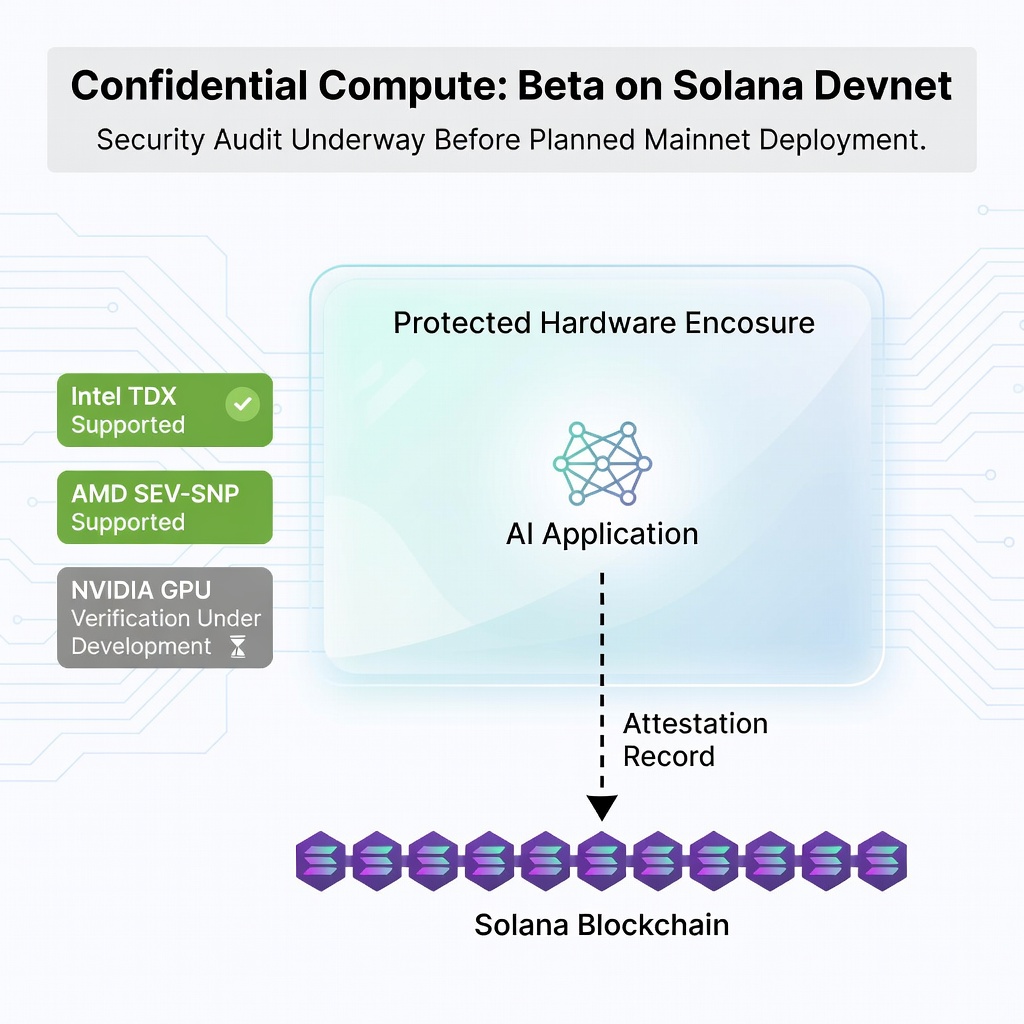
Confidential Compute is an open-source system developed by Nito in coordination with the Solana Foundation. It lets software run inside protected hardware environments while recording verification information on Solana, so applications can check whether results came from approved computing infrastructure.
As crypto.news reported on November 13, and as the November 23 account restated, the toolkit supports Intel TDX and AMD SEV-SNP hardware attestations, while NVIDIA GPU verification remained under development. Solana’s technical documentation describes uses that include private AI conversations and trading agents whose strategies and signing keys can stay inside confidential hardware.
As of the November 23, 2026 introduction, the system was available in beta on Solana devnet, with a security audit underway before a planned mainnet deployment. Mainnet deployment was described as planned, not complete. The Foundation has released Rust and TypeScript SDKs, an onchain verification program, and templates for building confidential AI applications.
What was introduced, tested, or still planned
- Introduced on November 23, 2026: solana.ai, including the Agent Kit and related developer tooling, the Milo trading-agent demonstration, and pay.sh for USDC service payments.
- Reported from September testing, and limited to channel authorizations: more than 1 million payment updates per second across 100,000 wallets, with final chain settlement handled separately.
- Not mainnet as of that report: Confidential Compute, in beta on devnet pending a security audit and a planned mainnet deployment; NVIDIA GPU verification still under development as described on November 13.